AI Governance Tools for Business: The Ultimate Guide to Safe Scaling
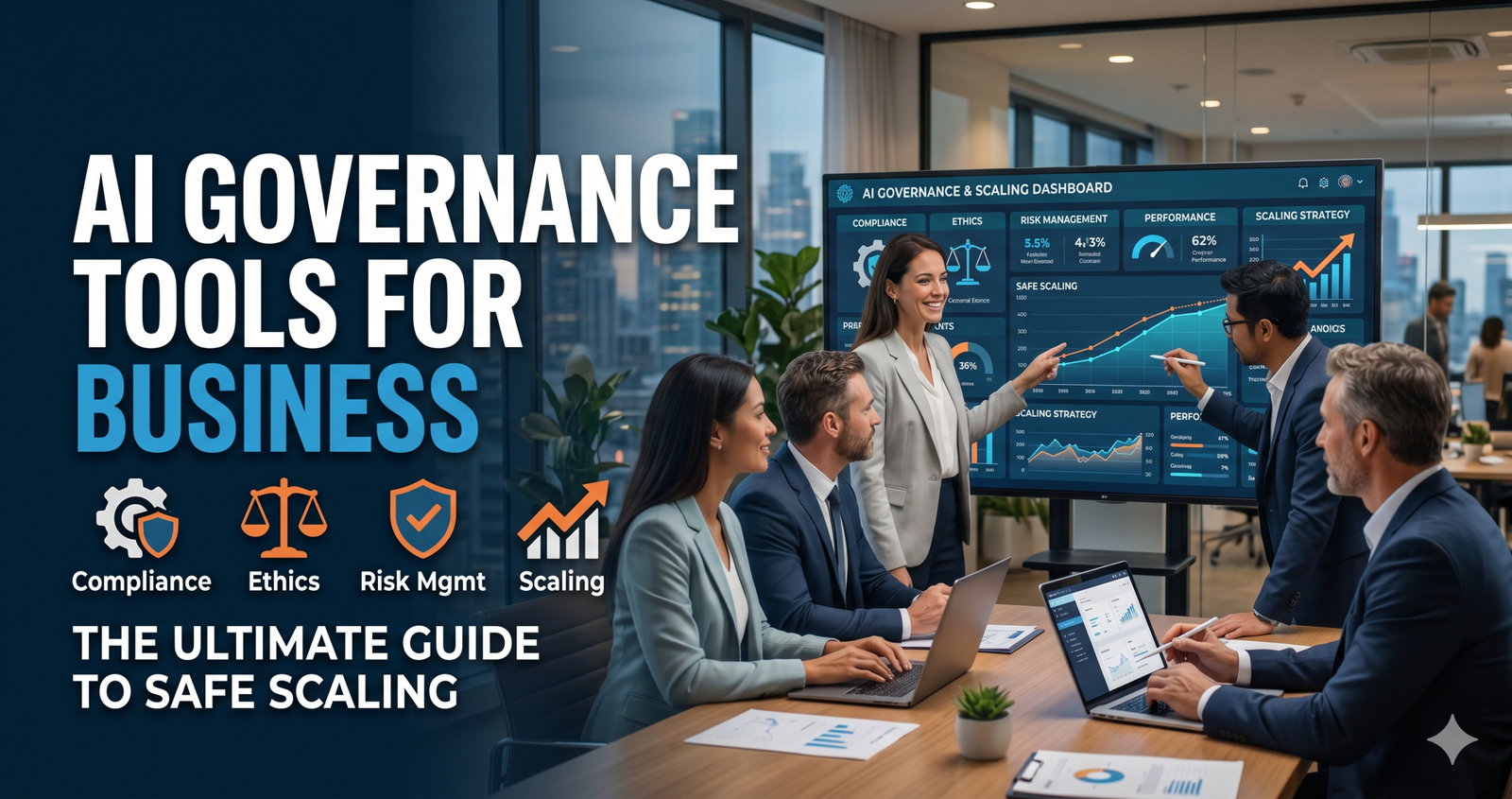
Let’s be honest: AI is moving faster than most of us can track. One day you’re experimenting with a chatbot, and the next, your entire team is using LLMs to draft sensitive contracts. It’s exciting, but it’s also a little terrifying. How do you know the data is safe? How do you stop “hallucinations” from becoming legal liabilities?
In my experience writing about emerging tech, the biggest mistake companies make isn’t using AI—it’s using it without a safety net. That is where AI governance tools for business come into play. These aren’t just “police” tools; they are the framework that lets you innovate without crashing the car.
Quick Summary: Key Takeaways
- Risk Mitigation: AI governance tools prevent data leaks and “hallucination” errors.
- Compliance: They help you stay on the right side of laws like the EU AI Act.
- Trust: Using these tools builds massive credibility with your customers and stakeholders.
Why Your Business Actually Needs AI Governance Right Now
We’ve all heard the horror stories of AI gone wrong. Maybe it’s a biased hiring algorithm or a leaked company secret in a public prompt. When we talk about AI governance tools for business, we are talking about visibility. You can’t manage what you can’t see.
Most businesses are currently in the “Wild West” phase of AI. Employees are “shadowing”—using personal AI accounts for work tasks. This creates a massive blind spot. According to recent industry reports, nearly 80% of employees use AI at work, but many do so without official oversight. Governance tools close that gap by providing a central dashboard to monitor every interaction.
5 Essential Features of Modern AI Governance Tools
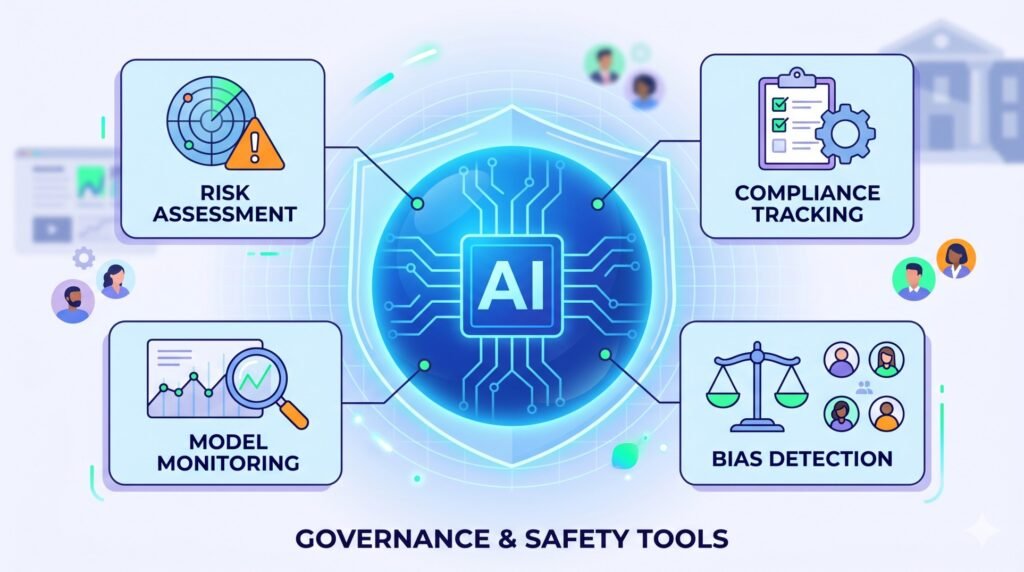
If you are shopping for a solution, don’t get distracted by flashy UI. You need tools that actually solve problems. Here is what I look for when testing these platforms:
1. Bias Detection and Mitigation
AI is only as good as the data it’s fed. If your training data is biased, your output will be too. Good tools scan for skewed results in real-time, ensuring your brand stays ethical.
2. Data Privacy and Security
This is the big one. You need “guardrails” that catch sensitive information—like credit card numbers or internal passwords—before they ever reach an external AI model.
3. Regulatory Compliance Tracking
With the EU AI Act and other global regulations looming, you need a tool that automatically maps your AI usage against legal requirements. It’s much cheaper than paying a fine later!
How AI Governance Tools for Business Build Customer Trust
I’ve personally used several governance frameworks, and the biggest “hidden” benefit is marketing. When you can tell your clients, “We have a third-party tool auditing our AI for fairness,” you win.
Trust is the new currency. If people think your AI is a “black box” that might steal their data, they won’t use it. Transparency tools allow you to generate reports that prove your AI is behaving. Moreover, it gives your leadership team the confidence to invest more in automation because they know the risks are capped.
Overcoming the Challenges of Implementing AI Oversight
It isn’t always sunshine and rainbows. Implementation can be a headache. Often, developers feel like governance slows them down. However, I’ve found that the right tools actually speed things up.
Think of it like brakes on a race car. The brakes aren’t there to make you go slow; they are there so you can go fast safely. The challenge is choosing a tool that integrates with your current workflow (like Slack or Microsoft Teams) rather than forcing you to learn a whole new ecosystem.
Common Implementation Hurdles:
- Cost: Some enterprise tools are pricey. Start small with open-source options if you have to.
- Culture: Your team needs to understand why these guardrails exist.
- Scalability: Make sure the tool can handle your growth.
Top AI Governance Platforms to Consider in 2026
While I won’t name every single one, there are a few heavy hitters currently dominating the space. Companies like Crendo, Monitron, and IBM OpenScale are leading the charge.
- For Large Enterprises: Look for deep integration and heavy compliance reporting.
- For Small Businesses: Look for “plug-and-play” guardrails that sit on top of ChatGPT or Claude.
- For Developers: Look for API-first tools that allow for custom testing of models.
In my view, the “perfect” tool doesn’t exist yet, but we are getting close. Honestly, I think the best approach is a “multi-layered” one where you combine built-in model safety with an external governance layer.
Expert Tips for Choosing the Right Tool for Your Team
Before you sign a contract, do a “stress test.” I always recommend running a small pilot program with one department—like HR or Customer Support—before rolling it out company-wide.
Moreover, pay attention to the “Explainability” factor. If the tool tells you a prompt was blocked, does it tell you why? A tool that just says “No” without an explanation is frustrating for your team. You want a partner, not a brick wall.
Frequently Asked Questions (FAQ)
What are AI governance tools for business?
These are software platforms that help companies monitor, manage, and secure their AI usage. They ensure that AI models are ethical, compliant with laws, and safe from data leaks.
Is AI governance only for big corporations?
Not at all. While big companies have more at stake, small businesses can use simpler versions of these tools to ensure they don’t accidentally leak client data or produce biased content.
Do these tools slow down AI performance?
If configured correctly, the latency is negligible. Most modern tools run in the background and only intervene when a high-risk activity is detected.
How much do AI governance tools cost?
Pricing varies wildly. Some lightweight browser extensions are affordable for small teams, while full enterprise suites can cost thousands of dollars per month depending on the volume of data.
Can these tools stop AI hallucinations?
They can’t stop the AI from trying to hallucinate, but they can catch the “fake” information before it reaches the end-user by fact-checking against your internal database.
Final Thoughts: The Future of Responsible AI
At the end of the day, AI governance tools for business are about peace of mind. We are living through a massive shift in how work gets done. It’s okay to feel a bit overwhelmed by it all. By putting the right systems in place now, you’re not just protecting your business; you’re future-proofing it.
Don’t wait for a data breach to start thinking about oversight. Start small, pick a tool that fits your culture, and keep your human experts in the loop.
What’s your biggest worry when it comes to AI in your office? Drop a comment below and let’s chat about it! If you found this helpful, share it with your IT manager—they’ll thank you later.