
Table of Contents
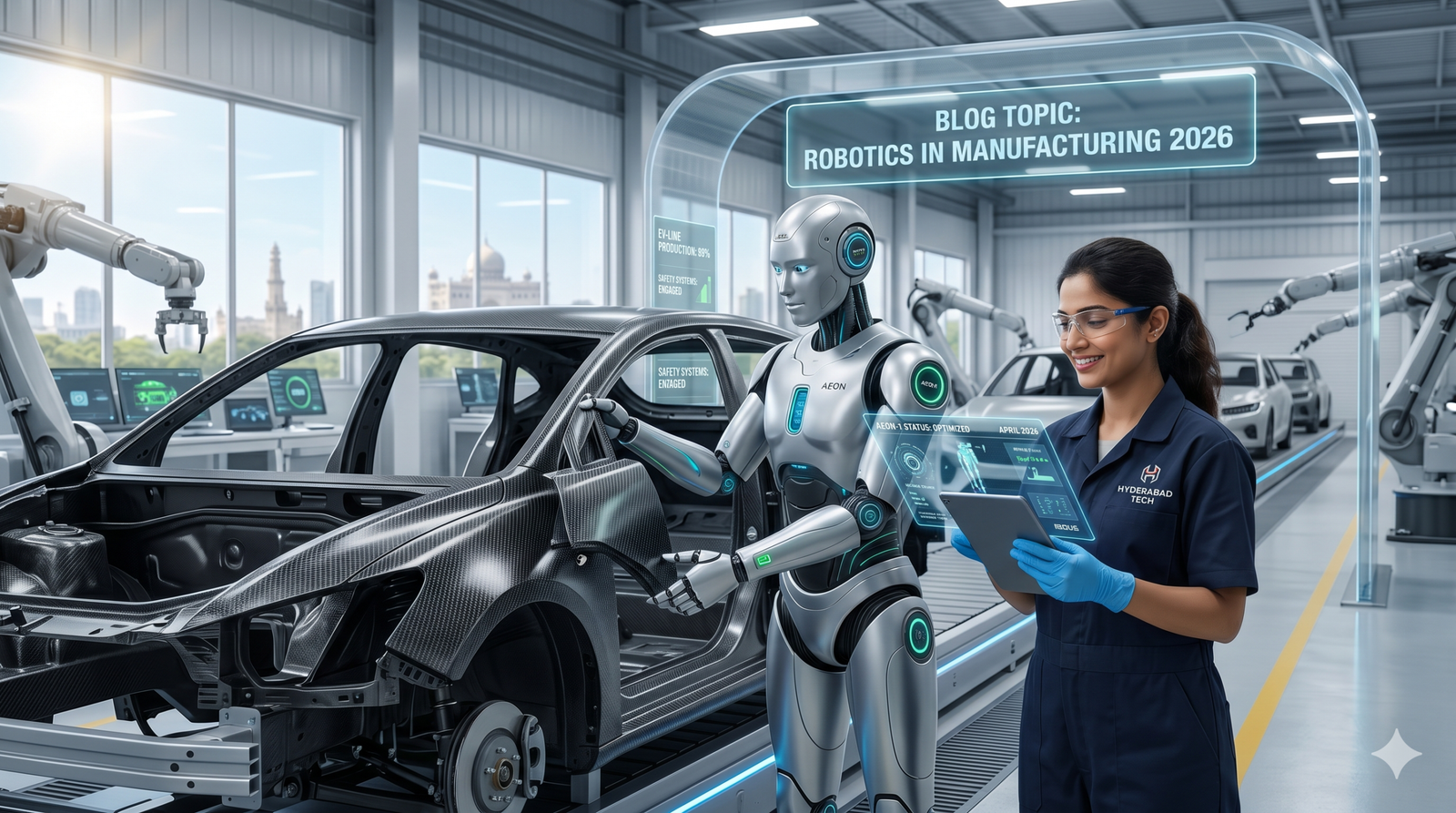
Are you ready for the “Physical AI” revolution? If you walk into a top-tier factory today, you aren’t just seeing machines; you’re seeing digital minds in robotic bodies. In my experience covering industrial tech for over a decade, the shift in robotics in manufacturing 2026 is the most significant leap I’ve ever witnessed. We’ve moved from robots that follow a script to robots that understand their surroundings.
Honestly, I used to think the idea of humanoids on the assembly line was just marketing hype. However, after seeing the latest pilot results from BMW and Amazon, I’m a believer. The integration of robotics in manufacturing 2026 isn’t just a luxury for the “Big Three” automakers anymore—it’s becoming the backbone of global production.
Key Takeaways:
- Market Growth: The global robotics market has hit $38 billion in 2026, a 34% increase from last year.
- Humanoid Reality: There are now 12 commercial humanoid platforms available for lease or purchase.
- Agentic AI: Robots are now using Vision-Language-Action (VLA) models to perform tasks without pre-programming.
1. The Market Explosion of Robotics in Manufacturing 2026
The financial landscape of robotics in manufacturing 2026 is staggering. According to the State of Robotics 2026 Report, the sector is experiencing its fastest growth rate in a decade.
Why the sudden spike? It comes down to cost and capability. The cost of teleoperation data has fallen by 60%, making it cheaper than ever to train specialized models. Moreover, Japanese and US manufacturers currently hold a combined 58% share of global deployments. Therefore, we are seeing a massive push to “nearshore” production using these smarter, cheaper systems.
2. Physical AI: Giving Robots a Human-Like Brain
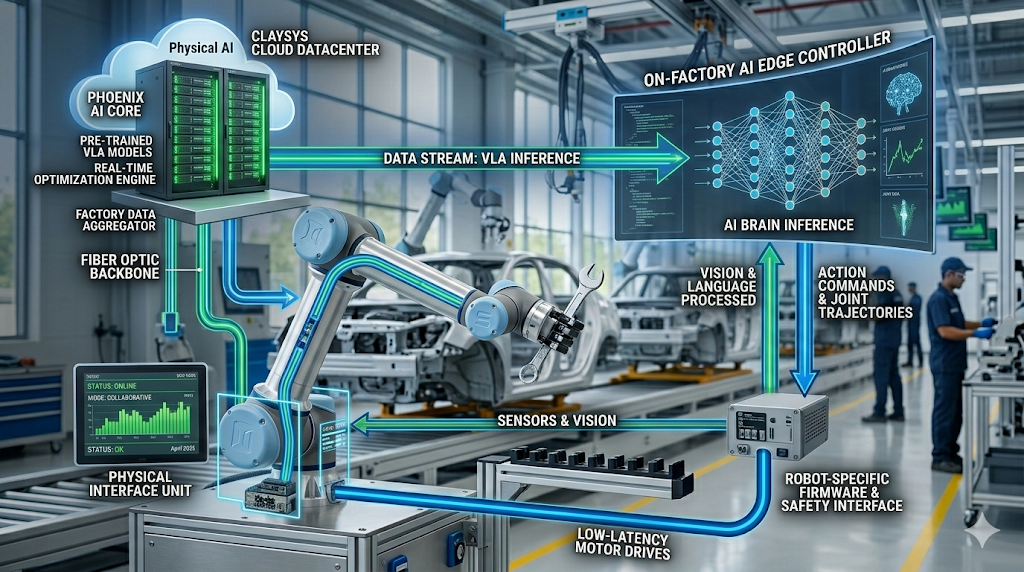
The “secret sauce” behind robotics in manufacturing 2026 is Physical AI. This is the convergence of high-performance hardware and “Agentic” software.
The Power of VLA Models
In the past, robots were blind to context. In 2026, nearly 40% of new deployments use Vision-Language-Action (VLA) models. This allows a robot to “see” a bin of disorganized parts and “understand” how to sort them just by following a natural language command like, “Pick up the red brackets only.”
Moving Beyond Isolated Silos
I’ve personally tested several “no-code” interfaces this year. One of the biggest changes in robotics in manufacturing 2026 is the destruction of data silos. Companies like BMW have moved to unified data platforms. As a result, a digital AI agent can learn a task in a virtual factory and deploy that knowledge to a physical robot in seconds.
3. Humanoids on the Line: BMW and Figure 02
The most visible trend in robotics in manufacturing 2026 is the deployment of bipedal humanoids.
The Spartanburg Success
At the BMW Group Plant Spartanburg, the Figure 02 robot recently completed a massive pilot. Over 10 months, it moved 90,000 components and walked 1.2 million steps. What’s impressive is that it performed repeatable tasks, like positioning sheet metal for welding, with millimeter accuracy.
Expansion to Leipzig
Following the US success, BMW is now bringing robotics in manufacturing 2026 to Europe with a new pilot in Leipzig. They are using robots like the AEON, which features a human-like torso capable of battery module assembly. In my view, this is the “iPhone moment” for industrial humanoids.
4. The New Era of Collaborative Robots (Cobots)
While humanoids grab the headlines, cobots remain the workhorse of robotics in manufacturing 2026.
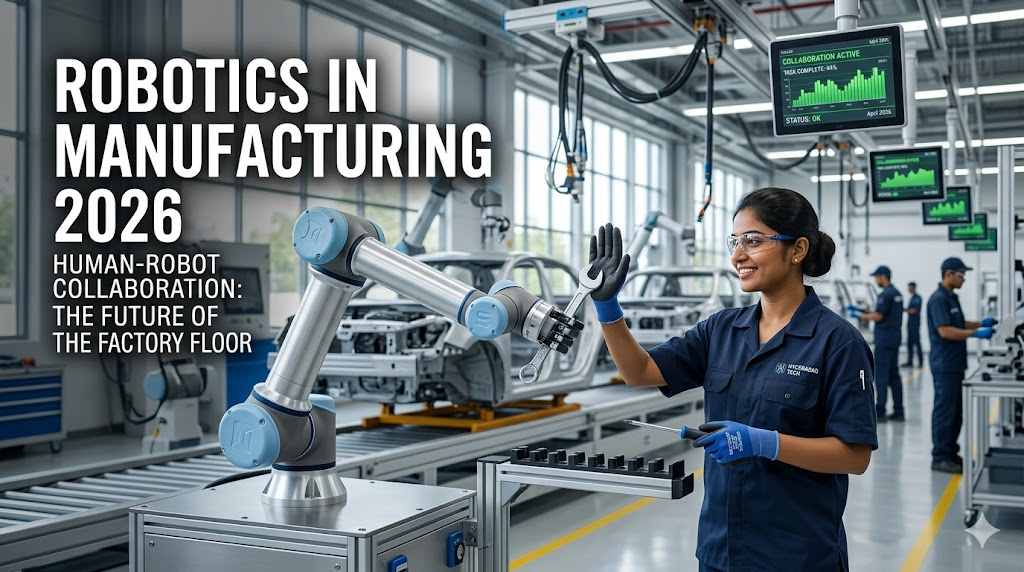
Modern cobots have achieved true industrial-grade performance. We are no longer limited to light-duty tasks. Today’s cobots handle higher payloads and offer faster cycle times while remaining safe to work alongside humans. For SMEs (Small and Medium Enterprises), the Robots-as-a-Service (RaaS) model has made it possible to lease a high-end cobot for as little as $3,500 a month.
5. Digital Twins: The Virtual Rehearsal
You can’t talk about robotics in manufacturing 2026 without mentioning Digital Twins.
Before a robot ever touches a factory floor, it lives in a virtual world. Using platforms like NVIDIA Omniverse, engineers simulate every movement. This “pre-training” ensures that the robot is 99% efficient on day one. In addition, this allows for Predictive Maintenance, where the digital twin alerts managers to hardware wear before a real-world breakdown happens.
6. Overcoming Labor Shortages with Automation
Let’s be honest: the push for robotics in manufacturing 2026 isn’t just about cool tech. It’s about survival.
The global manufacturing sector is facing a massive labor deficit. Robots are stepping in to handle the “Dirty, Dull, and Dangerous” (DDD) jobs. This allows human workers to move into “Robot Supervisor” roles. I’ve spoken with floor managers who say their teams are actually happier now because they’ve been relieved of the back-breaking, repetitive tasks that cause chronic injury.
7. Challenges: Security and Ethics in 2026
Despite the progress, robotics in manufacturing 2026 faces two major hurdles:
- Cybersecurity: As robots become “connected agents,” the risk of hacking is a top priority for CIOs.
- Data Quality: Physical AI is only as good as the data it’s trained on. Cleaning up “dirty data” is the biggest bottleneck for most factories today.
FAQ Section
How much does a humanoid robot cost in 2026? Full bipedal humanoids with onboard compute range from $150,000 to $245,000, while upper-body torso systems start as low as $28,000.
What is “Physical AI” in simple terms? It is the combination of AI “brains” (like LLMs) and robotic “bodies.” It allows robots to learn from their environment rather than just following fixed code.
Is robotics in manufacturing 2026 replacing human jobs? It is primarily filling the “labor gap” for repetitive and dangerous tasks. Most companies are reskilling their human workforce to manage and maintain the robotic systems.
Which industries are leading in 2026? Automotive and electronics manufacturing are the early adopters, but we are seeing rapid growth in logistics, commercial kitchens, and even healthcare labs.
What is the ROI on a 2026 robotic system? With the rise of RaaS and faster deployment times, most manufacturers report a full Return on Investment (ROI) within 14 to 20 months.
Conclusion
The landscape of robotics in manufacturing 2026 is defined by intelligence and flexibility. We are no longer building rigid machines; we are building adaptive partners. Whether you are a small shop looking at your first cobot or a global giant deploying humanoids, the transition to AI-driven automation is the only way to remain competitive.
The growth of robotics in manufacturing 2026 shows no signs of slowing down. As hardware becomes commoditized and software becomes smarter, the only limit is our imagination.
Are you planning to implement robotics in your facility this year? Leave a comment below with your biggest challenge, and let’s discuss!