
Table of Contents
Introduction
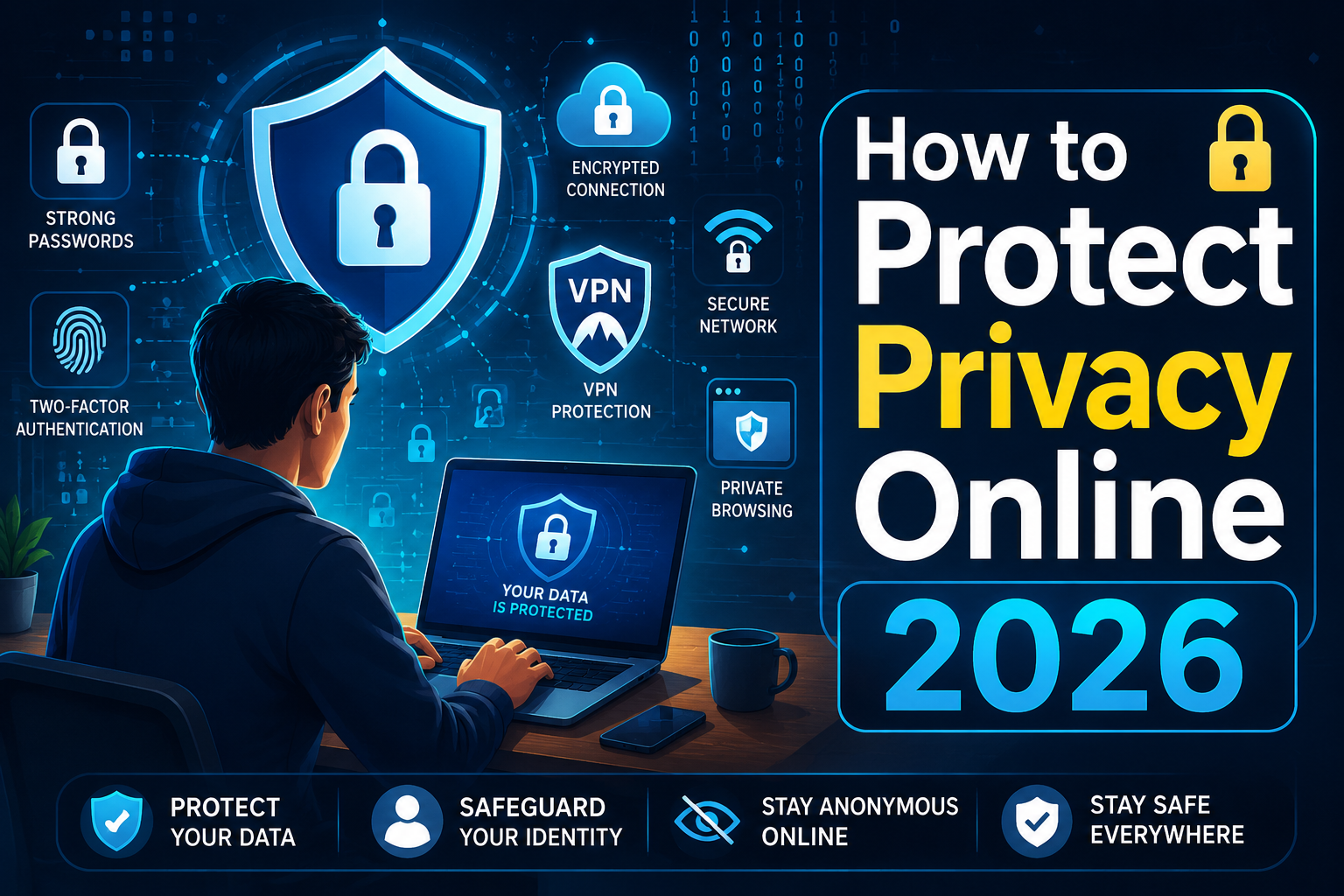
How to protect privacy online 2026 Let’s be honest—online privacy feels harder than ever these days. Every app wants your data, every website tracks your clicks, and scams are getting smarter.If you’re serious about learning how to protect privacy online 2026, you need more than just basic tips.
If you’re wondering how to protect privacy online in 2026, you’re not alone. The good news? You don’t need to be a tech expert to stay safe.
In my experience writing about cybersecurity and testing privacy tools, I’ve realized one thing: small changes make a big difference. Even basic habits can dramatically reduce your risk.
So, let’s break it down in simple, practical steps you can actually follow.
🔒 Quick Summary (Key Takeaways)
- Use strong passwords + 2FA to block most attacks
- Limit data sharing on apps and social media
- Use tools like VPNs, privacy browsers, and trackers blockers
Complete Guide on How to Protect Privacy Online 2026
Privacy isn’t just about hiding secrets. It’s about protecting your identity, money, and personal life.
Today, companies collect massive amounts of data:
- Browsing habits
- Location data
- Purchase behavior
- Even voice recordings
According to cybersecurity reports, data breaches and identity theft cases have increased significantly in recent years. As a result, protecting your digital footprint is no longer optional—it’s essential.
Honestly, I think many people still underestimate this. Until something goes wrong.
How to Protect Privacy Online in 2026
How to Protect Privacy Online 2026 (Step-by-Step)
Let’s get straight to actionable steps you can start today.
1. Use Strong Passwords (And Stop Reusing Them)
Weak passwords are still the #1 reason accounts get hacked.“When learning how to protect privacy online 2026, passwords are your first defense.” “Another key part of how to protect privacy online 2026 is controlling app permissions.”
Instead:
- Use at least 12–16 characters
- Mix letters, numbers, and symbols
- Avoid personal info like birthdays
Even better, use a password manager.
👉 Example: Instead of reshma123, use something like R!7p$k92Lm@xQ
Also, enable two-factor authentication (2FA) wherever possible. It adds an extra layer of security.
2. Control What You Share Online
We often overshare without realizing it.
Take a minute and check:
- Social media privacy settings
- App permissions
- Old posts and public data
Ask yourself:
“Would I be okay if a stranger saw this?”
If not, remove or restrict it.
In addition, avoid sharing:
- Your exact location in real time
- Personal documents
- Travel plans publicly
3. Use a VPN for Safer Browsing
A Virtual Private Network (VPN) hides your IP address and encrypts your internet traffic.
This is especially useful when:
- Using public Wi-Fi
- Accessing sensitive accounts
- Traveling
However, not all VPNs are equal. Choose one with:
- No-logs policy
- Strong encryption
- Good reputation
Protect Your Devices Like a Pro
Your device is your gateway to the internet. If it’s not secure, nothing else matters.
Keep Software Updated
Updates fix security vulnerabilities.
Turn on automatic updates for:
- Operating system
- Apps
- Antivirus software
Install Trusted Security Tools
Use:
- Antivirus software
- Anti-malware tools
- Firewall protection
These act like a digital shield.
Beware of Phishing & Online Scams
Scammers are smarter in 2026. Some emails and messages look 100% real.
Watch out for:
- Urgent messages (“Your account will be locked!”)
- Unknown links
- Requests for personal info
👉 Pro tip:
Always double-check the sender’s email address.
I once received a “bank alert” that looked real—but the email domain was slightly off. That tiny detail saved me.
Use Privacy-Focused Browsers & Search Engines
Your browser tracks more than you think.
Switch to privacy-friendly options that:
- Block trackers
- Limit cookies
- Don’t store search history
Also, install extensions like:
- Ad blockers
- Tracker blockers
This reduces data collection significantly.
Manage App Permissions Carefully
Apps often ask for more access than they need.
Check and disable:
- Camera access
- Microphone access
- Location tracking
For example:
Does a flashlight app really need your location? Probably not.
Protect Your Data on Public Wi-Fi
Public Wi-Fi is convenient—but risky.
Hackers can intercept your data easily.
If you must use it:
- Avoid logging into bank accounts
- Use a VPN
- Stick to HTTPS websites
Better yet, use mobile data for sensitive tasks.
Backup Your Data Regularly
Even with all precautions, things can go wrong.
Always keep backups:
- Cloud storage
- External hard drives
This protects you from:
- Ransomware
- Device failure
- Accidental deletion
1. Cybersecurity Awareness Resource
Use when talking about online safety basics
👉 cybersecurity best practices
Source:
- National Cyber Security Centre (NCSC) or similar government site
Example
Following proven cybersecurity best practices recommended by government agencies can significantly reduce online risks.
2. Data Breach / Privacy Statistics
“Why Privacy Matters”
👉 recent data breach statistics
Source:
- IBM Data Breach Report
- Statista
Example
According to recent data breach statistics, millions of user records are exposed every year, making privacy protection more important than ever.
3. Password Security Guide
👉 strong password guidelines
Source:
- NIST (National Institute of Standards and Technology)
Example
Experts recommend following strong password guidelines to prevent unauthorized access.
FAQ Section
1. What is the best way to protect privacy online in 2026?
Using strong passwords, enabling 2FA, and limiting data sharing are the most effective first steps.
2. Are VPNs really necessary?
Yes, especially on public Wi-Fi. They encrypt your data and protect your identity online.
3. How do I know if my data is being tracked?
If websites show targeted ads or apps request many permissions, your data is likely being tracked.
4. Can I stay completely anonymous online?
Not completely. However, you can significantly reduce tracking with the right tools and habits.
5. What should I do if my account is hacked?
Immediately:
- Change your password
- Enable 2FA
- Contact the platform support
Conclusion
Learning how to protect privacy online in 2026 isn’t about being paranoid—it’s about being prepared.Now you clearly understand how to protect privacy online 2026 and take control of your digital life.
Start small:
- Update your passwords
- Review app permissions
- Use basic security tools
Over time, these habits become second nature.
Honestly, once you take control of your privacy, you’ll feel much more confident online.
👉 Now it’s your turn:
Which privacy tip are you going to implement today? Drop a comment or share this guide with someone who needs it!