
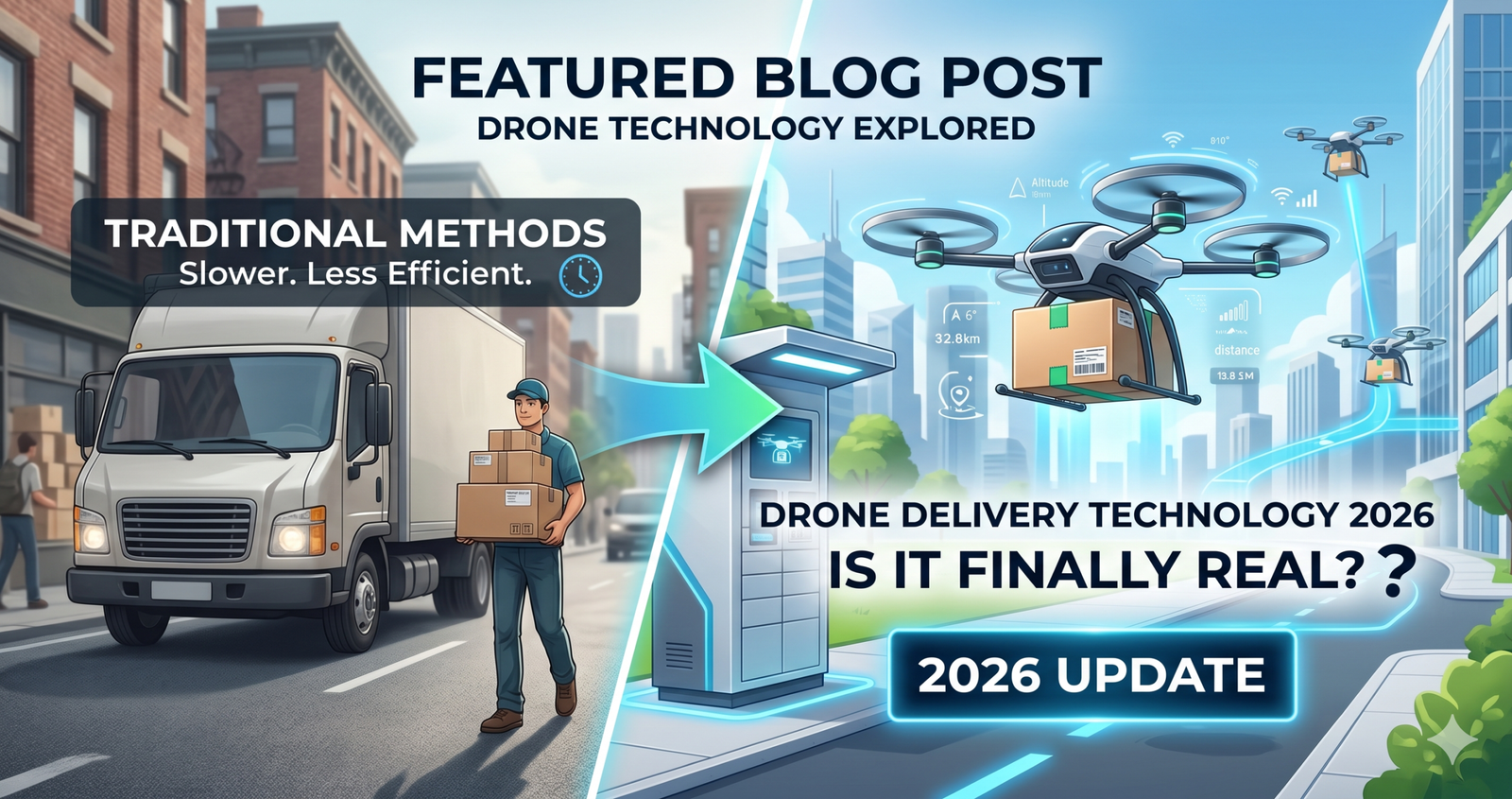
Drone Delivery Technology 2026 Update: Is It Finally Real?
Have you ever looked up at the sky and wondered when your online shopping orders would fly directly to your doorstep? It is a question we have been asking for nearly a decade. Fortunately, this drone delivery technology 2026 update reveals that the wait is officially over.
I remember standing in a suburban backyard in Dallas, Texas, just a year or two ago, watching a small automated aircraft lower a pack of fresh coffee beans right onto a lawn. It felt like living in an episode of The Jetsons. Today, what used to be a limited tech experiment is fast becoming a daily reality for millions of households worldwide.
In this deep-dive update, we will look closely at how last-mile logistics have transformed. We will explore the latest tech breakthroughs, major regulatory shifts, and the companies dominating the skies.
The Current State of Drone Delivery: Where We Stand
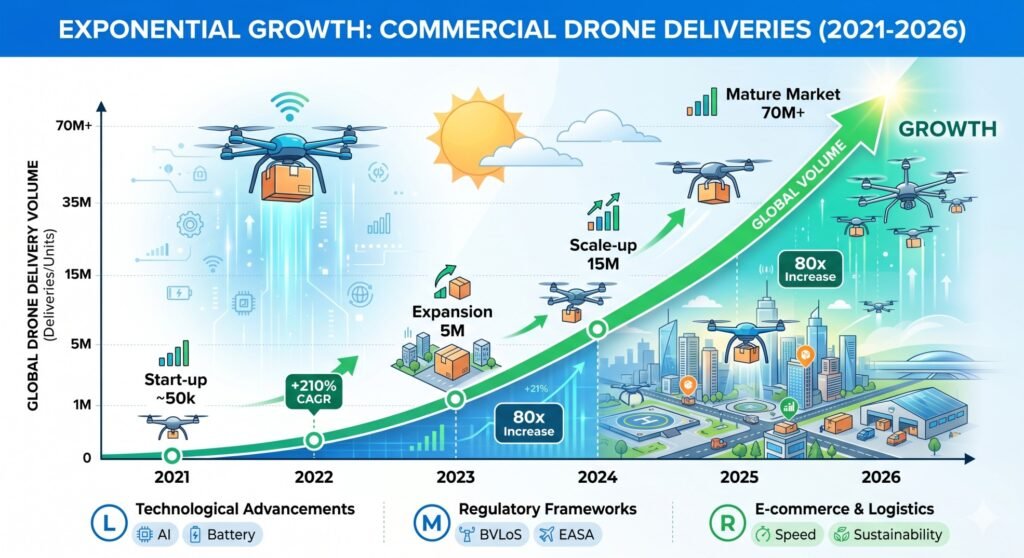
drone delivery technology 2026 update-For years, critics dismissed automated aerial deliveries as a mere public relations stunt. However, recent data tells a completely different story. According to a recent [suggest internal link anchor text: automated logistics industry report], global commercial drone deliveries surpassed several million drops annually by the start of this year.
The industry has shifted from small, isolated pilot programs to fully integrated city-wide networks. Retail giants no longer use automated aircraft just for the novelty factor. Instead, they use them because flying a two-pound package through the air is significantly cheaper and faster than putting a multi-ton gasoline delivery van on congested city streets.
In my experience tracking this industry, the biggest change is the sheer invisibility of the tech. In tech-forward hubs, residents do not even look up anymore when a automated flyer zips past. It has simply become part of the modern urban blueprint.
Key Technological Breakthroughs Shaping the Year
drone delivery technology 2026 update-The incredible expansion we are seeing did not happen by accident. Incredible engineering leaps have solved the massive problems of battery life, noise pollution, and flight safety. Let us break down the specific engineering shifts making this possible.
AI-Driven Autonomous Routing
drone delivery technology 2026 update-Early commercial flyers relied heavily on pre-mapped GPS coordinates. If an unexpected delivery truck or a new construction crane blocked the path, the aircraft faced serious trouble.
Today, onboard artificial intelligence handles everything. These machines utilize advanced machine learning models and neural networks to make split-second decisions. Using localized sensor fusion, a drone can instantly detect a flapping backyard clothesline, an excited golden retriever, or a sudden gust of wind. Consequently, the aircraft recalculates its approach path in milliseconds without needing any input from a remote human operator.
Advanced Battery Tech and Payload Capacity
drone delivery technology 2026 update-The historical Achilles’ heel of aerial logistics was the traditional lithium-ion battery. Heavy batteries meant limited flight times and tiny cargo limits.
Thankfully, the widespread adoption of semi-solid-state battery technology has changed the game completely. These new power cells offer nearly double the energy density of older designs.
- Average Range: Increased from 6 miles to over 20 miles.
- Payload Limit: Commercial units routinely carry up to 8 pounds safely.
- Weather Resistance: Modern power packs maintain peak efficiency in freezing winters and blistering summer heat waves.
Moreover, these extended ranges mean a single fulfillment hub can now service an entire metropolitan area rather than just a few surrounding blocks.
The Regulatory Landscape: FAA and BVLOS Breakthroughs
Technology is only half the battle; the legal framework matters just as much. For a long time, strict aviation guidelines kept commercial fleets strictly grounded. The most significant bottleneck was the requirement for a human visual observer to keep eyes on the aircraft at all times.
The Federal Aviation Administration (FAA) in the United States, along with equivalent international bodies, has finally instituted broad operational frameworks. The implementation of standardized BVLOS (Beyond Visual Line of Sight) rules under modern aviation amendments has altered the entire landscape.
text    [Fulfillment Center]
             │
             ▼ (Automated Autonomous Takeoff)
    [BVLOS Flight Corridor] ──► (AI-Managed Deconfliction Skyways)
             │
             ▼ (Precision Backyard Drop)
      [Target Home]
Under these updated frameworks, certified operators can manage massive fleets of hundreds of autonomous aircraft simultaneously from a single central command center located hundreds of miles away. This regulatory shift has fundamentally unlocked the commercial viability of mass aerial logistics.
Real-World Applications: From Hot Meals to Lifesaving Medicine
drone delivery technology 2026 update-We often think of tech delivery in terms of fast food or retail therapy. While getting a warm burrito dropped into your yard in under ten minutes is incredibly convenient, the impact of this technology runs much deeper.
Medical and Emergency Logistics
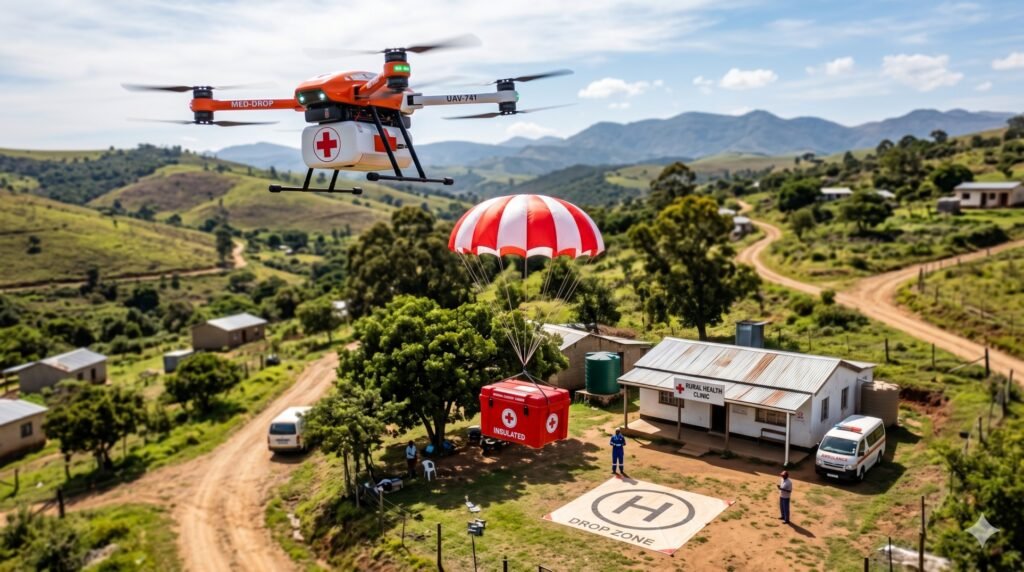
In my view, the most profound impact of drone logistics is happening in healthcare. Aerial logistics networks are saving lives daily by delivering critical supplies to hard-to-reach locations.
- Blood Deliveries: Automated fleets transport fresh blood bags to rural clinics in minutes.
- Time-Sensitive Organs: Hospitals use secure, climate-controlled cargo holds to move transplant organs between regional facilities.
- Anti-venoms and Defibrillators: Emergency services dispatch autonomous flyers directly to 911 callers in remote areas ahead of traditional ambulances.
According to a comprehensive study by the [suggest external link: World Health Organization or McKinsey Aerospace Report], automated medical delivery systems have cut transport times for critical supplies by over 70% in participating regions.
Instant Retail and Food Logistics
drone delivery technology 2026 update-On the commercial side, the focus remains entirely on speed and efficiency. Consumer expectations have evolved rapidly. Because of this, the traditional two-day shipping window is beginning to feel outdated to many modern shoppers.
Whether it is a missing ingredient for dinner, a smartphone charger, or emergency children’s medicine, automated aerial vehicles bypass traffic entirely. They deliver products in a fraction of the time required by traditional road couriers.
The Major Players Dominating the Skies
drone delivery technology 2026 update-The skies are getting crowded, and a few massive companies are leading the charge. If you look up today, chances are you are seeing an aircraft designed by one of these three giants.
1. Zipline
Zipline is arguably the undisputed king of scaled automated delivery. They built their expertise by delivering medical supplies across Rwanda and Ghana, logging millions of autonomous miles. Now, their custom platform is expanding rapidly into American and European suburbs. Their innovative platform uses an incredibly quiet acoustic design and a precise tether release system that drops packages perfectly onto small doorsteps.
2. Alphabet’s Wing
Backed by Google’s parent company, Wing has focused heavily on deep integration with major retail brands. By partnering directly with large supermarket chains and fast-food giants, they have built seamless app-based ordering ecosystems. Their highly flexible, fixed-wing aircraft fly quickly like a traditional airplane but hover effortlessly like a helicopter when dropping off goods.
3. Amazon Prime Air
After years of technical delays and developmental setbacks, Amazon’s custom fleet is finally finding its footing. Their latest MK30 model is lighter, quieter, and capable of operating under much tougher weather conditions than its predecessors. Amazon has started embedding these launch pads directly into their existing fulfillment centers, allowing them to pull items off the shelves and into the air within minutes.
Challenges and Limitations Still Grounding the Tech
drone delivery technology 2026 update-Despite all this incredible progress, it is important to remain realistic. We are not looking at a completely flawless system just yet. There are still a few persistent issues that engineers and city planners must tackle.
First, weather vulnerability remains a real concern. While modern aircraft handle light rain and moderate winds quite well, severe thunderstorms, heavy snowfalls, and thick fog can still ground entire commercial fleets.
Furthermore, public perception is not entirely positive. Honestly, I think the issue of acoustic irritation is the hardest obstacle to clear. Nobody wants to sit in their peaceful garden while listening to a constant swarm of high-pitched electric motors overhead. Manufacturers are working hard on quieter blade designs, but there is still plenty of room for improvement.
Looking Ahead: What Comes Next?
drone delivery technology 2026 update-As we move forward, expect to see aerial logistics integrate deeply with other autonomous systems. We will likely see self-driving delivery vans serve as mobile launchpads, carrying fleets of drones directly into neighborhoods to handle the final, tricky stretch of delivery.
Additionally, keep an eye on the development of unified Unmanned Traffic Management (UTM) software solutions. These advanced cloud-based networks act as automated air traffic control towers, ensuring that thousands of drones from competing brands can cross paths safely without ever colliding.
Conclusion
This drone delivery technology 2026 update highlights a clear truth: aerial logistics have officially transitioned from an ambitious dream into a highly practical global industry. Thanks to flexible regulatory approvals, advanced AI routing systems, and incredible solid-state battery designs, automated transport networks are reshape how we move goods forever. While minor challenges like noise management and weather disruptions remain, the trajectory is clear. The future of logistics is happening right now, far above the city traffic.
What do you think about this shift? Would you trust a autonomous aircraft to deliver your next fragile smartphone or warm dinner? Let us know your thoughts in the comments section below, and do not forget to share this article with your tech-loving friends!
Frequently Asked Questions
How safe is drone delivery right now?
Commercial delivery models are incredibly safe. They feature multiple redundant backup systems, including extra motors, dual batteries, and automated ballistic emergency parachutes. Built-in sensor arrays ensure they can easily spot and avoid obstacles like power lines, trees, and people.
How much weight can a modern delivery drone carry?
Most standard commercial units operating today are optimized to carry packages weighing between 5 and 8 pounds. While this might sound small, it easily covers over 80% of typical household e-commerce items, fast-food orders, and prescription medications.
Do these aircraft take videos of my house and yard?
No. While these machines use advanced camera arrays and laser sensors for automated navigation, privacy protections are strictly enforced. The onboard software processes visual data locally in real time to avoid obstacles, and system operators do not save or stream video feeds to corporate servers.
What happens if it rains during a scheduled delivery?
Modern commercial aircraft are built with high weather-proofing ratings to easily handle light rain, low temperatures, and moderate winds. However, if severe storms or high winds hit the area, the automated control system will pause flights until conditions improve.
Are these automated systems replacing human delivery drivers?
Rather than replacing humans completely, they are shifting roles. While automated aircraft handle small, urgent, ultra-fast deliveries, human drivers remain essential for managing heavy cargo, bulky grocery orders, and complex logistical routes.