
Table of Contents
Does your current software feel like a giant game of Jenga? You know the feeling—you try to update one tiny feature, and suddenly the whole system starts wobbling. In the past, we lived with these “monolithic” giants because they were the industry standard. But as we move deeper into 2026, that’s no longer the case.
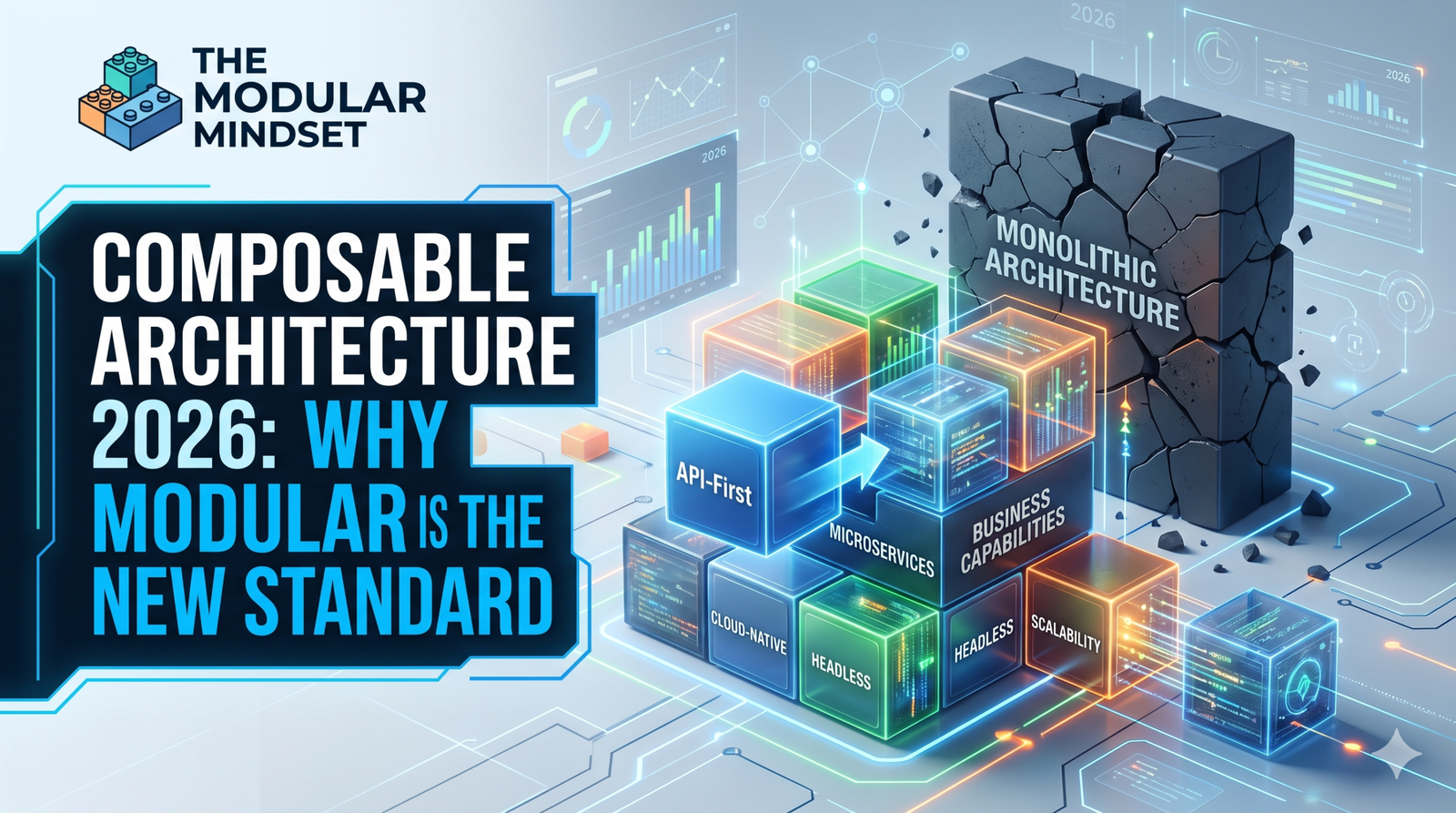
Composable architecture software 2026 is the answer to the rigid, “all-in-one” systems of the past. It’s a design philosophy that treats software like a set of Lego bricks rather than a solid block of concrete. If you want to swap out your payment processor or upgrade your search engine, you just unplug the old one and snap in the new one. No system-wide crashes, no three-month development delays.
Key Takeaways
- Agility is King: Businesses using composable systems can deploy new features up to 80% faster than those stuck in legacy monoliths.
- Vendor Freedom: You aren’t locked into one provider; you pick the “best-of-breed” for every specific function.
- Future-Proofing: By 2026, experts predict over 60% of SaaS enterprises will have adopted composable methods to slash technical debt.
What Exactly is Composable Architecture?
In my experience writing about enterprise tech for over a decade, I’ve seen many trends come and go. However, composable architecture software 2026 isn’t just a buzzword—it’s a fundamental shift in how we think about digital infrastructure.
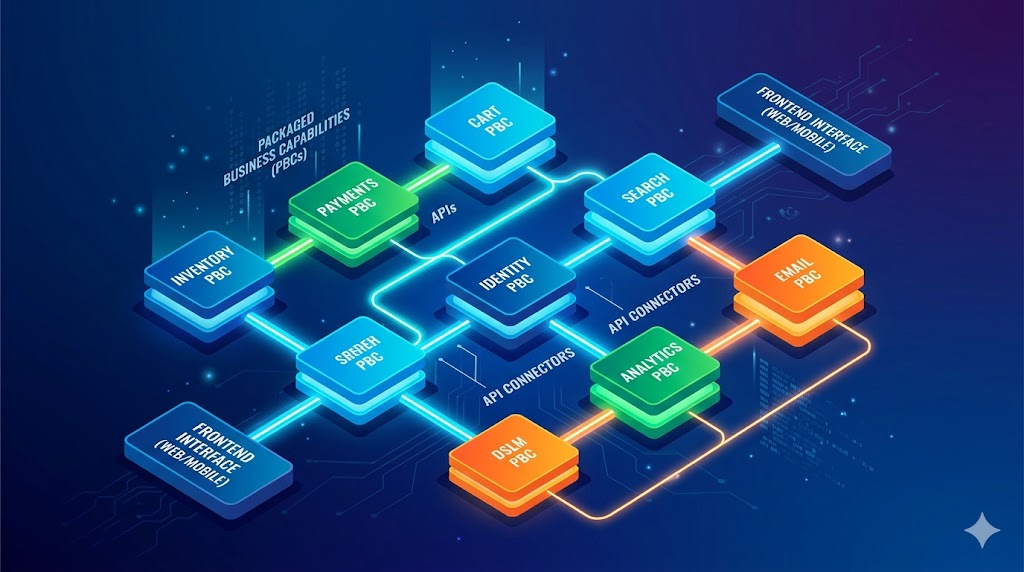
At its core, a composable system is made of Packaged Business Capabilities (PBCs). These are independent, specialized software components that perform one job and do it well (like a shopping cart or an identity manager). These pieces communicate through APIs, allowing you to “compose” a unique application tailored to your exact needs.
The Difference Between Headless and Composable
Many people confuse “headless” with “composable.” While they’re cousins, they aren’t the same:
- Headless: Decouples the frontend (what the user sees) from the backend (the logic).
- Composable: Takes it further by breaking the backend itself into multiple independent pieces.
Why 2026 is the Year of the Composable Enterprise
We’ve officially hit a tipping point. According to recent industry reports, most forward-thinking organizations expect to achieve full modularity by the end of this year. But why the sudden rush toward composable architecture software 2026?
1. The Death of Technical Debt
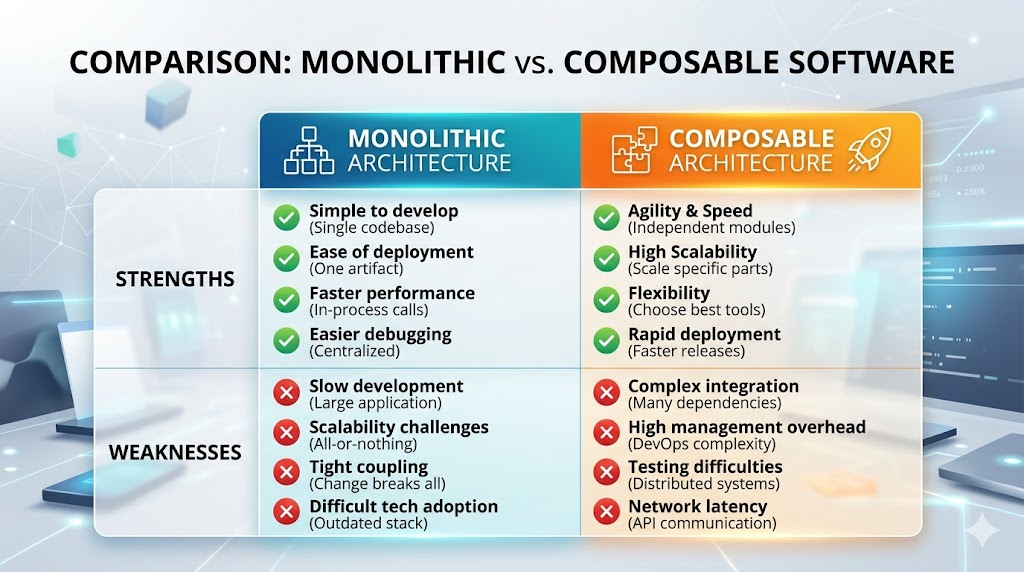
In a monolithic setup, code becomes tangled over time. We call this “spaghetti code.” Moreover, as these systems age, they become nearly impossible to update. Composable architecture software 2026 prevents this by keeping every component isolated. If one part gets “messy,” you replace it without touching the rest of the house.
2. Hyper-Personalization at Scale
Customers in 2026 don’t just want a good experience; they want their experience. Composable stacks allow you to integrate specialized AI agents and domain-specific language models into your workflow instantly. Therefore, you can offer real-time personalization that a “one-size-fits-all” suite simply can’t match.
The Core Components of a 2026 Tech Stack
To build a truly effective composable architecture software 2026 environment, you need three main pillars. I’ve personally seen companies struggle when they skip one of these, so pay close attention to how they interact.
Pillar 1: Microservices and PBCs
Instead of one massive application, your system is a collection of small services. Each service is autonomous. For example, your inventory management doesn’t need to know how your email marketing tool works; they just talk through a standard “handshake.”
Pillar 2: API-First Connectivity
APIs are the glue. In a composable architecture software 2026 world, every component must be “API-first,” meaning it was designed from day one to share data with other tools. This eliminates the need for expensive, custom-built bridges between your software.
Pillar 3: Cloud-Native Infrastructure
To get the most out of modularity, you need the cloud. This allows you to scale individual components. If your checkout page is getting slammed during a flash sale, you can scale only that component, saving you massive amounts on server costs.
Real-World Benefits: More Than Just “Fast”
It’s easy to talk about “agility,” but what does that look like in the real world? Honestly, I think the biggest win for users of composable architecture software 2026 is reduced risk.
Imagine you’re a retail giant. You want to experiment with a new “Buy Now, Pay Later” service.
- The Monolith Way: You wait for your suite provider to add it to their roadmap (12 months), or you pay developers a fortune to hack it into your core code.
- The Composable Way: You find a best-of-breed provider, plug their API into your “checkout” module, and test it on 5% of your traffic by next Tuesday.
“The ability to adapt quickly is no longer a competitive advantage—it is a necessity for survival in 2026.” — Industry Insight.
Challenges to Keep in Mind (The Honest Truth)
I wouldn’t be a helpful friend if I didn’t tell you the downsides. Shifting to composable architecture software 2026 isn’t a magic wand; it requires a higher level of “tech maturity.”
- Integration Complexity: Managing 15 different vendors is harder than managing one. You need a strong DevOps team to handle the orchestration.
- Consistency: With different teams working on different modules, you have to work harder to keep the user experience seamless.
- Initial Cost: Migrating from a legacy system to composable architecture software 2026 has an upfront cost. However, the long-term savings on maintenance and “lost opportunity” costs usually make it worth it.
How to Start Your Migration Journey
Don’t try to change everything at once. That’s a recipe for disaster. Instead, follow this incremental roadmap to implement composable architecture software 2026 principles:
- Identify the “Pain Point”: What part of your software is currently slowing you down the most? Start there.
- Build a “Strangler” Layer: Use APIs to wrap around your legacy system, slowly replacing old functions with new, composable modules one by one.
- Invest in Governance: Set clear rules for how new components are chosen and integrated to avoid “vendor sprawl.”
FAQ: Everything You Need to Know
Is composable architecture only for large enterprises?
No! While large companies benefit most from the scale, startups use composable architecture software 2026 to stay lean. It allows them to pay for only the features they need.
How does this affect SEO?
Composable setups often lead to faster load times because you aren’t loading a massive “monolithic” backend for every request. As a result, your Core Web Vitals often improve.
Is “MACH” the same as Composable?
MACH (Microservices, API-first, Cloud-native, Headless) is a specific set of standards. You can learn more about these requirements through the MACH Alliance standards and certifications, which many composable systems follow.
What is the projected market growth?
The market for composable applications is expected to hit over $17 billion by 2029, showing a steady climb as more businesses abandon legacy tech.
Do I need a huge dev team for this?
You don’t necessarily need a huge team, but you do need a skilled one. You’ll need people who understand API orchestration and cloud-native environments.
Final Thoughts on Composable Architecture
As we look at the landscape of composable architecture software 2026, one thing is clear: the era of being “locked-in” to a single vendor is over. We’re moving toward a world where software is as fluid and adaptable as the markets we serve.
Whether you’re a CTO looking to slash technical debt or a business owner wanting to move faster, modularity is your best friend. In my view, the temporary complexity of setting up composable architecture software 2026 is a small price to pay for a system that will never grow “old” or “obsolete” again.
Ready to modernize your stack? Start by auditing your most rigid legacy component today. If you found this guide helpful, share it with your tech lead or subscribe to our newsletter for more 2026 tech insights!