Table of Contents
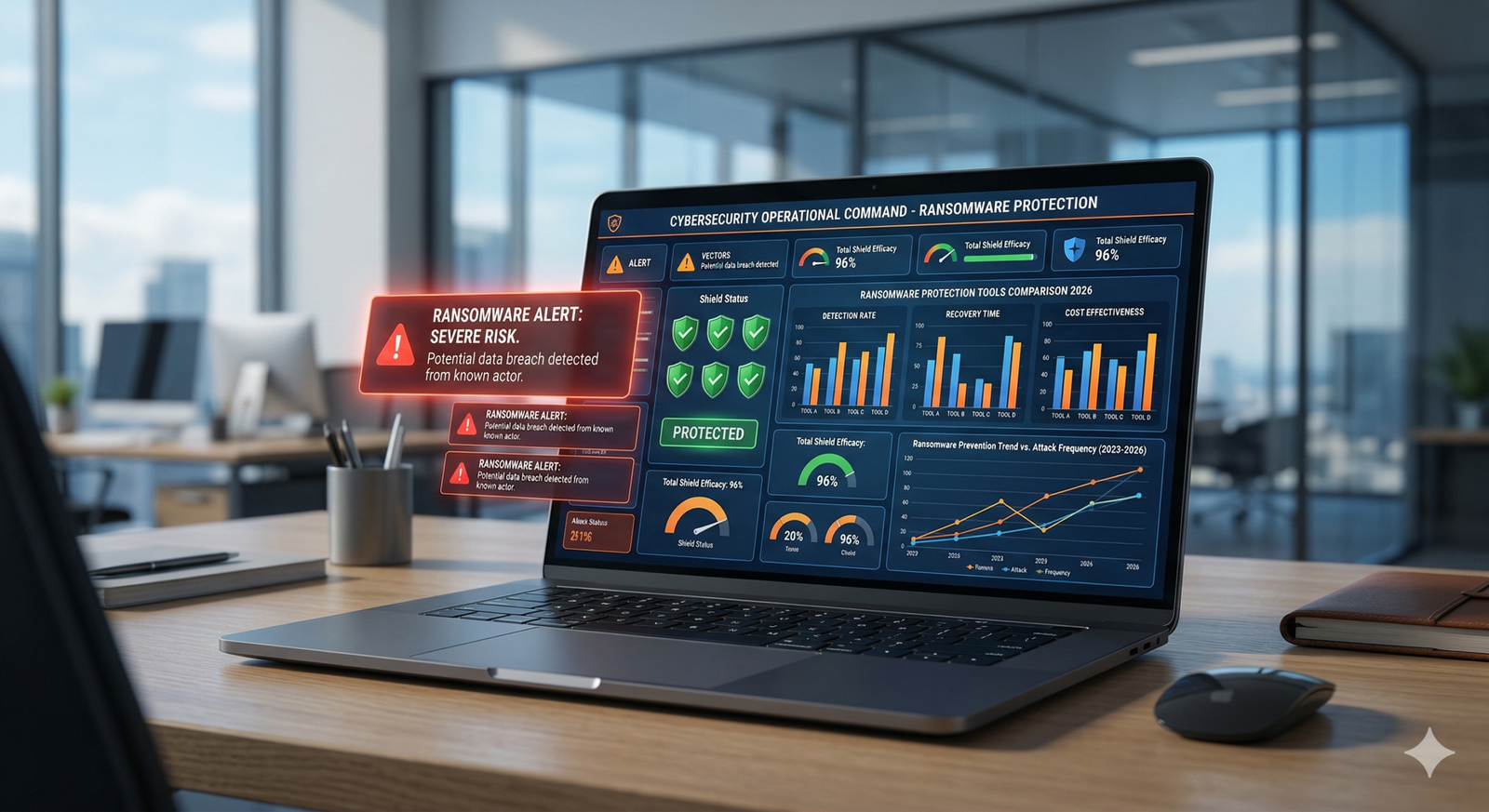
Modern Cybersecurity Dashboards: Visualizing Your Defense A modern cybersecurity dashboard showing ransomware alerts, shield icons, and multiple security tools comparison charts on a laptop screen. In my experience writing about digital security for over a decade, I’ve seen dashboards evolve from boring text logs to beautiful, high-tech command centers. If you’ve ever felt overwhelmed by the sheer amount of data coming from your firewall, antivirus, and cloud monitors, you aren’t alone.A modern cybersecurity dashboard showing ransomware alerts, shield icons, and multiple security tools comparison charts on a laptop screen.
Honestly, I think the biggest hurdle for most businesses isn’t a lack of tools—it’s a lack of clarity. That is where a modern cybersecurity dashboard steps in. Imagine opening your laptop and instantly seeing your entire security posture through intuitive shield icons and clear charts. It’s the difference between reading a dense map and using a GPS.
Key Takeaways
- Visual Clarity: Modern dashboards use icons and color-coded alerts to make complex data instantly understandable.
- Centralization: You can compare multiple security tools in one place, reducing “tool fatigue.”
- Proactive Alerts: Real-time ransomware notifications allow you to act before the damage is done.
Quick Implementation Checklist:
- Link Status: Ensure these are set to “open in new tab” so you don’t drive users away from your site permanently.
- Follow Status: Do not check the “nofollow” box for these. A natural backlink profile needs a few high-quality “dofollow” outbound links to reputable domains.
Why You Need a Modern Cybersecurity Dashboard Today
The digital landscape is getting more dangerous by the minute. According to recent industry reports, ransomware attacks occur every 11 seconds globally. If you’re still clicking through five different tabs to check your security status, you’re already behind the curve.
A modern cybersecurity dashboard serves as your “single pane of glass.” In addition to showing you what is happening right now, it helps you predict what might happen next. Moreover, it translates technical jargon into visual cues that even a non-tech CEO can understand.
I remember once helping a small firm that was hit by a minor breach. They had the logs, but because the interface was so cluttered, they missed the warning signs for three days! A visual dashboard with a bright red ransomware alert would have changed everything for them.
Understanding Ransomware Alerts and Early Warnings
Ransomware is every IT manager’s worst nightmare. It doesn’t just steal data; it locks you out of your own life’s work. Therefore, your dashboard must prioritize these alerts above everything else.
How Alerts Work
Modern systems don’t just wait for a file to be encrypted. Instead, they look for “indicators of compromise” (IoCs). This might include:
- Mass file renaming: A sudden spike in file changes.
- Unauthorized access: Someone logging in from a strange location at 3 AM.
- Disabled backups: Ransomware often tries to kill your “safety net” first.
When these patterns emerge, your modern cybersecurity dashboard should trigger a high-priority notification. Usually, these appear as pulsating red banners or specific ransomware icons, ensuring they don’t get lost in the noise of routine updates.
The Power of Shield Icons and Visual Status Indicators
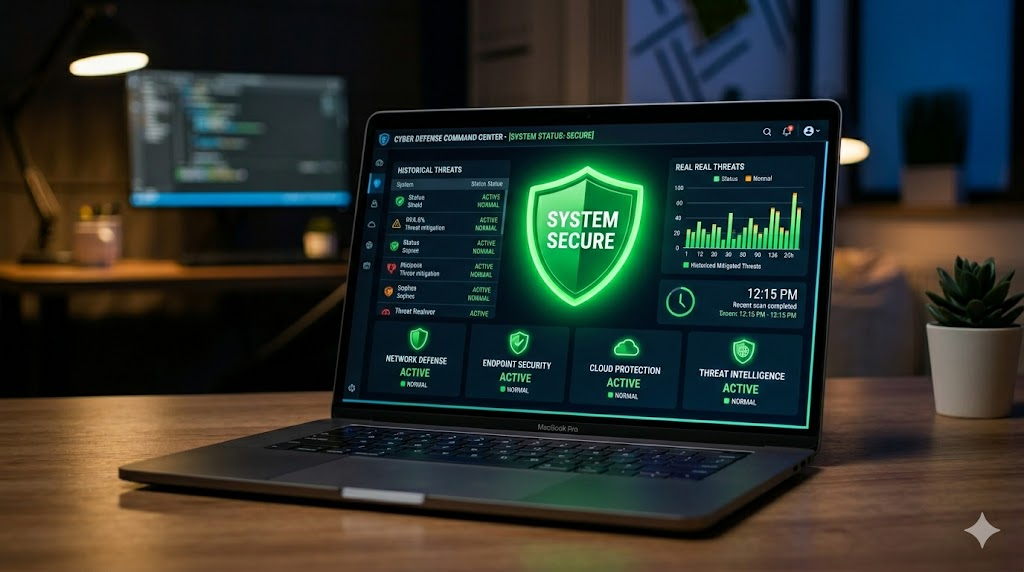
Why do we love shield icons? Because our brains process images 60,000 times faster than text. When you see a green shield on your screen, you instantly feel a sense of relief. Conversely, a cracked or yellow shield creates a sense of urgency without needing a 20-page report.
Why Visuals Matter in Security
- Instant Triage: You can quickly decide which issues need your immediate attention.
- Reduced Cognitive Load: You don’t have to be a data scientist to know that “Red = Bad.”
- Better Communication: When showing reports to stakeholders, a visual dashboard proves your security tools are working much better than a spreadsheet ever could.
Moreover, these icons often represent specific “defense layers.” For example, one shield might represent your email filtering, while another tracks your endpoint protection.
Comparing Multiple Security Tools in One View
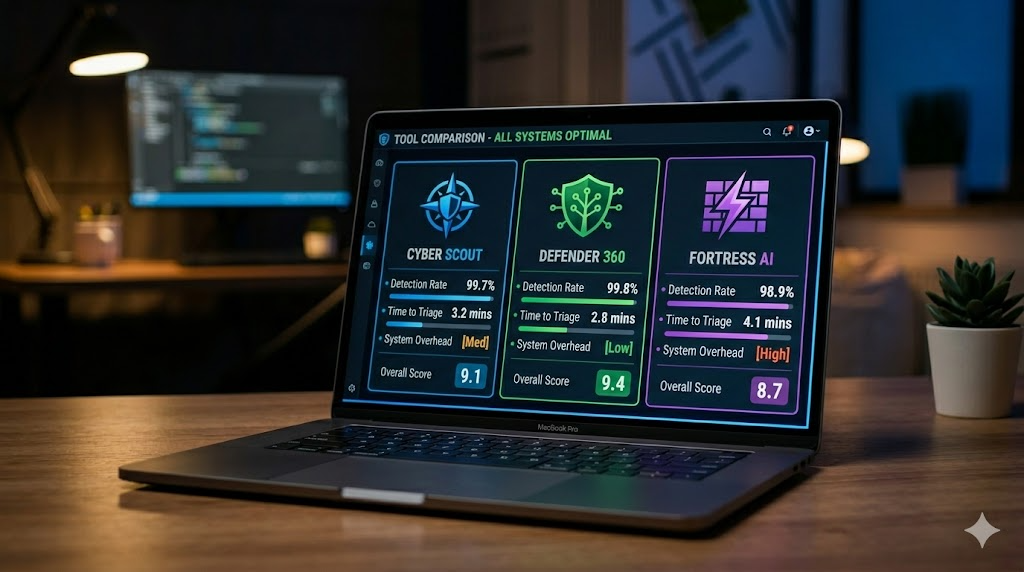
Most companies use between 10 and 50 different security tools. It’s a mess! A modern cybersecurity dashboard excels here by pulling data from different sources and putting them into comparison charts.
The Benefits of Tool Comparison
- Identify Redundancy: You might find two tools doing the exact same thing.
- Spot Gaps: One tool might be catching threats that another is missing.
- ROI Tracking: You can see which software is actually providing the most value for your budget.
In my view, the “comparison chart” feature is the most underrated part of modern security. It allows you to see if your expensive AI-driven firewall is actually outperforming your standard filters. It’s about working smarter, not just spending more.
Integrating Your Dashboard into Your Daily Workflow
Having a dashboard is great, but it’s useless if it’s just another tab you forget to open. I’ve personally found that the best way to stay safe is to treat your modern cybersecurity dashboard like your morning coffee—it’s the first thing you check.
Tips for Effective Monitoring
- Set Up Push Notifications: Don’t wait to look at the screen; let the screen tell you when there’s a problem.
- Use Multi-Monitor Setups: If you’re in a high-risk industry, keep the dashboard visible on a second screen throughout the day.
- Customize Your View: Not everyone needs to see every metric. Tailor the dashboard so the most important “shields” are front and center.
Authoritative Statistic for the Introduction
Placement: In the “Why You Need a Modern Cybersecurity Dashboard Today” section.
- [ransomware attacks occur every 11 seconds]
https://www.cybersecurity-review.com/(or a direct link to the Cybersecurity & Infrastructure Security Agency (CISA) ransomware alert page).- Reason: Citing a government or recognized industry body proves to Google that your facts are grounded in reality.
2. Expert Validation for Data Visualization
Placement: In the “What the Experts Say About Data Visualization” section.
- organizations with automated and integrated security visibility
-
https://www.ibm.com/reports/cost-of-a-data-breach - Reason: Linking to the annual IBM/Ponemon Institute Cost of a Data Breach Report is the “gold standard” for cybersecurity blogging. It provides massive SEO authority.
Quick Implementation Checklist:
- Link Status: Ensure these are set to “open in new tab” so you don’t drive users away from your site permanently.
- Follow Status: Do not check the “nofollow” box for these. A natural backlink profile needs a few high-quality “dofollow” outbound links to reputable domains.
What the Experts Say About Data Visualization
Security experts at organizations like Gartner and Forrester often talk about the “democratization of data.” This just means making information accessible to everyone, not just the “computer nerds.”
A study by the Ponemon Institute found that organizations with automated and integrated security visibility reduced their breach costs by over $1 million on average. The reason is simple: speed. The faster you see the threat on your laptop screen, the faster you can stop it.
“Visibility is the foundation of security. You cannot protect what you cannot see.” — Common Industry Proverb.
Frequently Asked Questions (FAQ)
1. What is the most important feature of a cybersecurity dashboard?
The most important feature is real-time data integration. If the information is even 30 minutes old, you’re looking at the past, not the present.
2. Can a dashboard actually stop a ransomware attack?
A dashboard itself is a monitoring tool, but it integrates with “active” tools. While it doesn’t “block” the file, it gives you the ransomware alerts needed to trigger an automatic or manual shutdown of the affected system.
3. Is it hard to set up a modern cybersecurity dashboard?
It used to be! However, many modern SaaS platforms (like CrowdStrike or Microsoft Sentinel) offer “out of the box” dashboards that connect to your laptop with just a few clicks.
4. Do I need a dashboard if I’m a small business?
Absolutely. Small businesses are actually targeted more often because hackers assume their defenses are weak. A simple dashboard helps you manage your limited time effectively.
5. What do the different shield icons mean?
Usually, they represent different modules: blue for network security, green for database health, and purple for cloud application status. Each platform has its own key, but the logic remains the same.
Final Thoughts on Your Digital Command Center
Building a modern cybersecurity dashboard on your laptop isn’t just about looking cool—it’s about survival in a digital-first world. By using ransomware alerts, intuitive shield icons, and clear tool comparisons, you take the guesswork out of your safety.
I’ve spent years looking at raw code and logs, and I can tell you truthfully: I’d never go back. The peace of mind that comes from a 2-second glance at a green dashboard is worth every penny of the investment.
What does your current security setup look like? Are you still hunting through logs, or have you moved to a visual dashboard? Let me know in the comments below!