
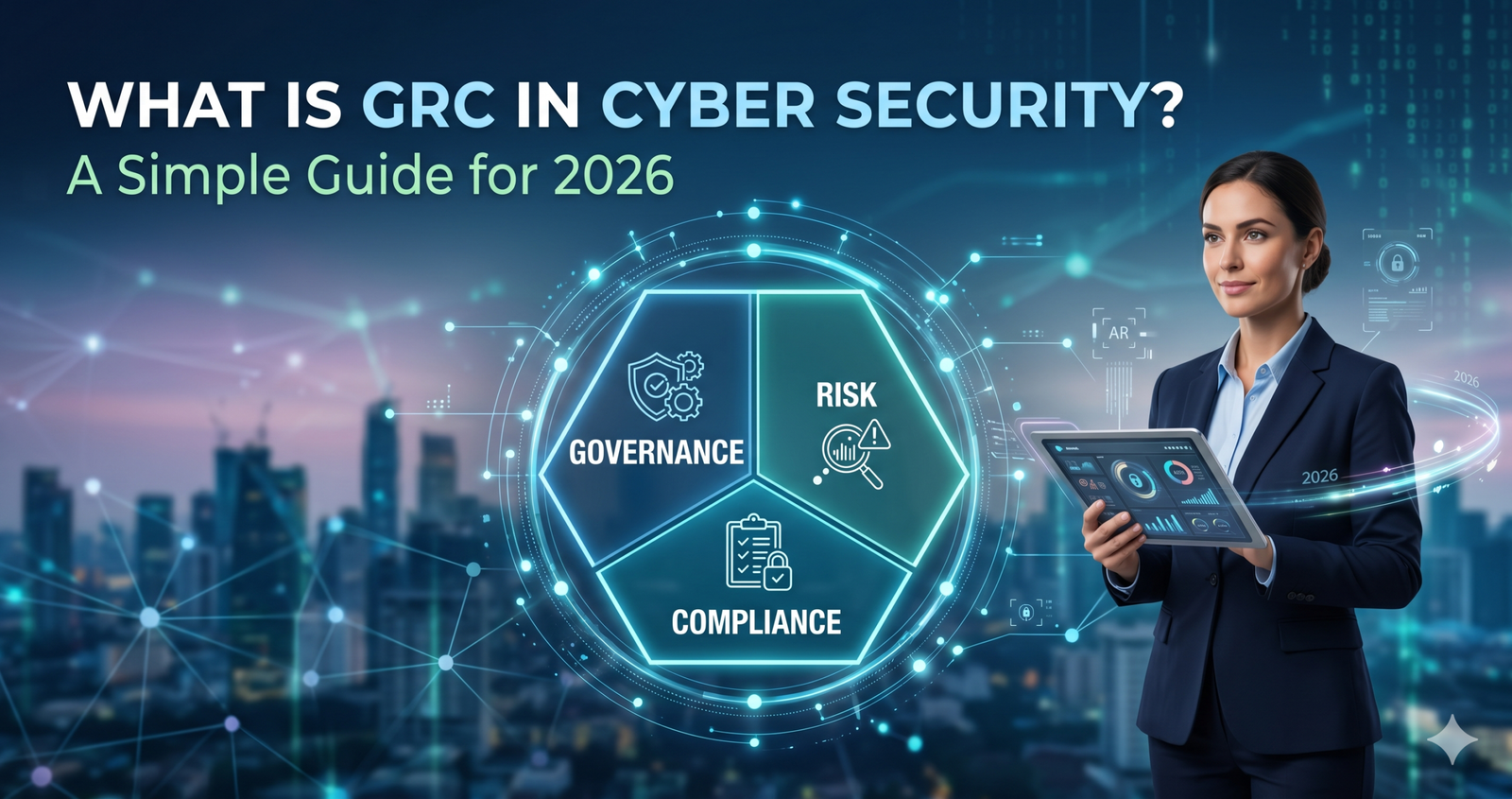
What is GRC in Cyber Security? Your Ultimate Guide
Let’s be honest: cyber security can feel like a never-ending game of Whac-A-Mole. Just when you think you’ve patched every hole, a new threat pops up, or a new government regulation lands on your desk.
In my experience writing about information security for over a decade, I’ve seen companies throw millions at fancy firewalls only to fail because they didn’t have a plan. That’s where GRC comes in. It’s the “brain” behind the “brawn” of your security tools.
But what is GRC in cyber security, exactly? Is it just corporate buzzwords, or is it the secret sauce to staying safe? Let’s break it down in plain English.
💡 Key Takeaways
- GRC stands for Governance, Risk Management, and Compliance.
- It aligns your IT goals with your business goals while keeping you on the right side of the law.
- Implementing GRC reduces “siloed” thinking and helps prevent costly data breaches.
Understanding the Three Pillars of GRC
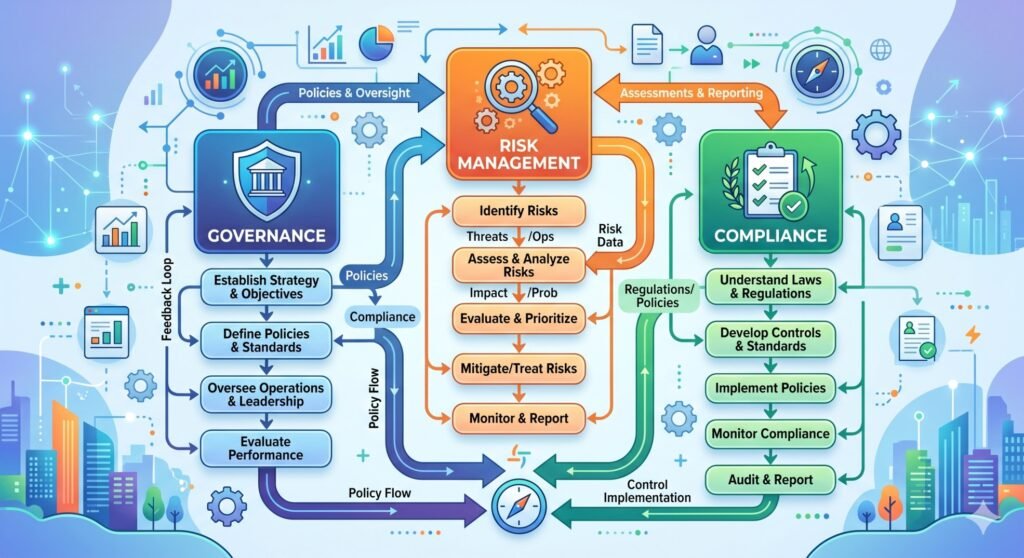
To understand the big picture, we have to look at the three individual components. Think of them like a tripod; if one leg is missing, the whole thing falls over.
1. Governance: The Rulebook
Governance is about leadership and direction. It’s the set of rules, Peek-a-Boo policies, and hierarchies that dictate how an organization operates. In cyber security, governance ensures that your security activities actually support your business goals.
2. Risk Management: The Shield
Risk management is the process of identifying what could go wrong and deciding how to handle it. You can’t fix every tiny bug, so you focus on the ones that could actually hurt your bottom line.
3. Compliance: The Checklist
Compliance means following the rules set by outside bodies. This could be government laws like GDPR or industry standards like PCI-DSS. It’s about proving to the world (and regulators) that you’re doing what you said you’d do.
Why GRC is the Backbone of Modern Cyber Security
In the old days, the “IT guys” lived in a basement and handled security on their own. Today, a single data breach can tank a company’s stock price or result in millions in fines. According to IBM’s Cost of a Data Breach Report 2025, the average cost of a breach has climbed above $4.9 million.
What is GRC in cyber security if not a financial insurance policy? It moves security out of the server room and into the boardroom. When leadership understands the risks, they allocate the budget. When there’s a clear policy, employees know not to click on that suspicious “invoice” attachment.
Moreover, GRC helps eliminate “silos.” I once worked with a firm where the legal team bought a software tool that the IT team didn’t even know existed. That’s a security nightmare. GRC ensures everyone is talking to each other.
The Core Benefits of a Strong GRC Strategy
If you’re wondering why you should invest time in this, here are the real-world wins I’ve seen:
- Better Decision Making: You aren’t guessing where to spend money; you’re following a risk-based map.
- Reduced Complexity: Instead of managing 50 different security tools, you manage one unified strategy.
- Trust and Reputation: Customers are more likely to share their data if they know you follow strict compliance standards.
- Agility: When a new law (like a new privacy act) is passed, a GRC-ready company can adapt in weeks, not months.
How to Implement GRC in Your Organization
You don’t need a massive team to start. Honestly, I think the biggest mistake small businesses make is thinking GRC is only for the “Big Guys.”
Start with a Framework
Don’t reinvent the wheel. Use established frameworks like NIST or ISO 27001. These provide a “paint-by-numbers” approach to setting up your governance and risk structures.
Audit Your Current Status
Where do you stand? You can’t manage what you don’t measure. I recommend [Internal Link Suggestion: Anchor text “conducting a cyber security audit”] to see where your biggest gaps are.
Choose the Right Tools
Managing GRC on a spreadsheet is a recipe for a headache. Modern GRC platforms automate the boring stuff—like tracking compliance deadlines or sending out policy reminders to staff.
Common Challenges (And How to Overcome Them)
It’s not all sunshine and rainbows. Implementing GRC can be a bit of a slog at first. One of the biggest hurdles is “Culture Shock.” People generally don’t like new rules. If you suddenly tell your marketing team they can’t use a specific unvetted AI tool, they might push back. The key is transparency. Explain why the rule exists. It’s not about being the “Department of No”; it’s about being the “Department of Let’s Not Get Sued.”
Another issue is Data Overload. You can get so many risk alerts that you start ignoring them. This is where “Risk Appetite” comes in. You have to decide which risks are acceptable and which are “red alerts.”
[IMAGE SUGGESTION: An illustration of a person overwhelmed by paperwork vs. a clean digital dashboard.]
The Role of AI in GRC (The 2026 Perspective)
As we move through 2026, Artificial Intelligence has changed the GRC landscape significantly. We’re now seeing AI-driven compliance tools that can read 500 pages of new legislation and summarize exactly which of your policies need to change.
However, a word of caution: don’t let the AI drive the car without a human in the passenger seat. AI can hallucinate or miss the nuances of your specific business culture. Use it to speed up the work, not to replace the expert judgment of your CISO (Chief Information Security Officer).
Practical Examples: GRC in Action
Let’s look at a relatable example. Imagine you run an e-commerce site.
- Governance: You set a policy that all customer data must be encrypted.
- Risk Management: You identify that your third-party payment processor is a “high-risk” point of failure. You decide to have a backup processor ready just in case.
- Compliance: You undergo an annual audit to ensure you are meeting PCI-DSS standards so you can keep accepting credit cards.
Without GRC, you might encrypt the data but forget to vet the payment processor. Or you might meet compliance but have no policy for what happens if a breach actually occurs.
FAQ: Frequently Asked Questions about GRC
1. Is GRC only for large corporations?
Absolutely not. While big banks have entire departments for this, small businesses need it too. A smaller “Lite” version of GRC can prevent a single mistake from putting you out of business.
2. What is the difference between IT Security and GRC?
IT Security is the “how” (firewalls, passwords, antivirus). GRC is the “why” and “who” (policies, laws, and risk assessments).
3. Which GRC framework is the best?
There is no “best” one, but NIST is great for general security in the US, while ISO 27001 is the gold standard for international credibility.
4. Does GRC help with insurance?
Yes! Most cyber insurance providers now require proof of a GRC program before they will even give you a quote. It proves you are a “responsible” risk.
5. Can GRC be fully automated?
You can automate the monitoring and reporting, but the final decisions on risk and governance must come from human leadership.
Wrapping Up: Why GRC Matters Now
So, what is GRC in cyber security at its core? It’s the strategy that keeps your business resilient in a digital world that’s getting more complicated by the second. It’s about being proactive instead of reactive.
In my view, the peace of mind that comes with knowing you’re compliant and your risks are managed is worth every penny of the investment. You don’t want to be the person explaining to a judge or your customers why you “didn’t have a policy” for a predictable disaster.
What’s your biggest challenge with staying compliant? Drop a comment below or share this guide with your IT team to start the conversation!
For more insights on protecting your digital footprint, check out our guide on [Internal Link Suggestion: Anchor text “best cyber security practices for 2026”] or visit [External Link Suggestion: Anchor text “CISA’s official guidelines”] for the latest threat updates.
Author Bio: I’m a senior cyber security strategist and tech blogger with over a decade of experience helping firms bridge the gap between complex tech and business logic. I’ve navigated everything from the early days of GDPR to the current AI-driven threat landscape, and I’m passionate about making security accessible for everyone.