
Introduction
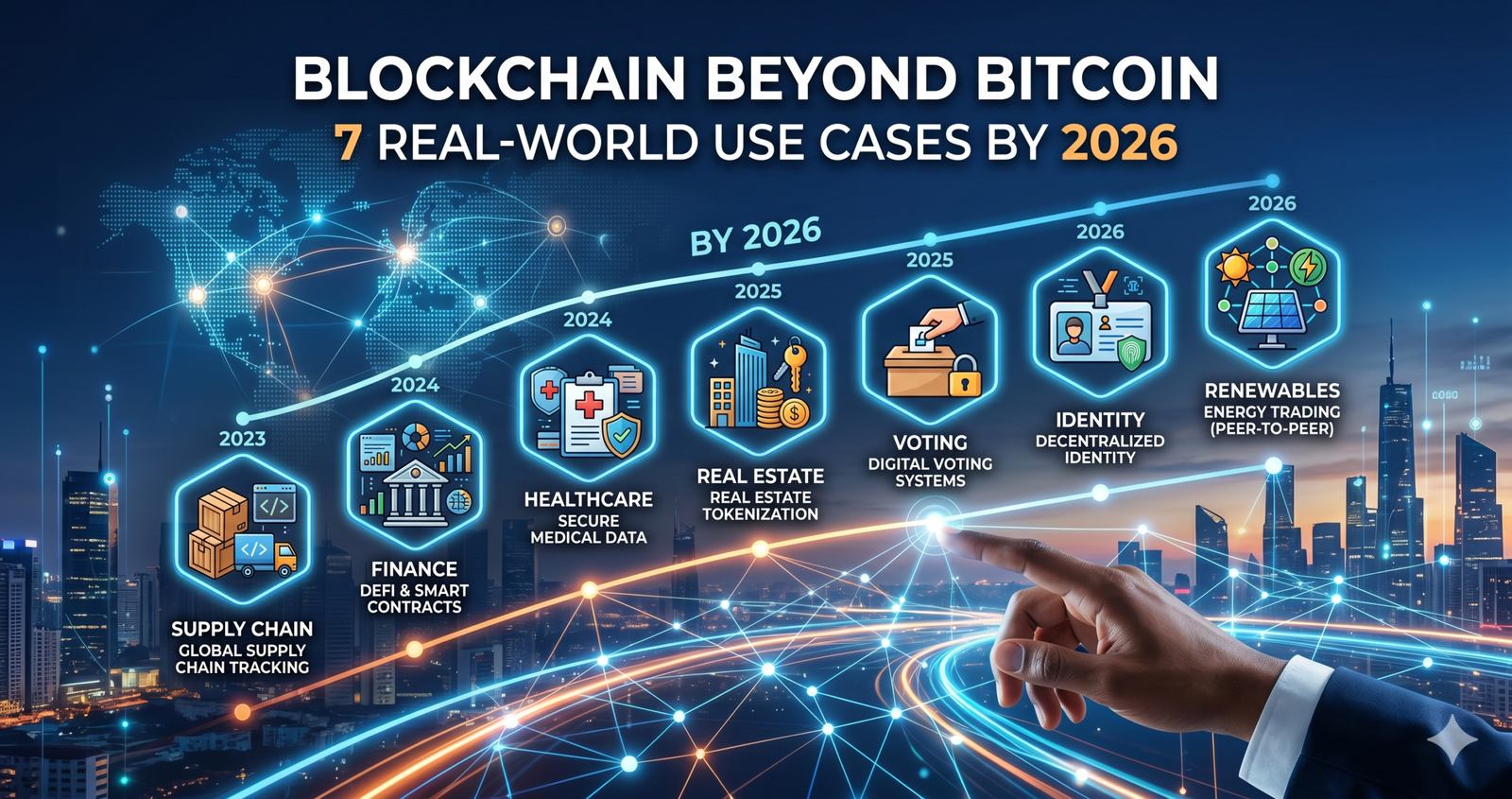
Blockchain Beyond Bitcoin: 7 Real-World Use Cases by 2026-When most people hear “blockchain,” they immediately think of Bitcoin and volatile crypto markets. But what if I told you the most exciting applications of this technology have nothing to do with digital currency?
In my experience writing about emerging tech, the narrative around blockchain is shifting dramatically. By 2026, experts predict its true revolution will unfold in sectors far from finance. We’re talking about blockchain use cases that solve real, everyday problems—from ensuring your coffee is ethically sourced to protecting your most sensitive medical records.
So, let’s move past the crypto hype. This guide explores seven powerful, non-crypto ways blockchain will be used by 2026, and why you should pay attention.
Key Takeaways:
- Blockchain’s value in 2026 extends far beyond cryptocurrency into supply chains, healthcare, and governance.
- Core benefits like transparency, security, and immutability are driving its adoption in real-world systems.
- Understanding these applications now is key to grasping the next phase of digital transformation.
1. Revolutionizing Supply Chain Transparency-Blockchain Beyond Bitcoin: 7 Real-World Use Cases by 2026
Imagine scanning a QR code on a bag of coffee and seeing its entire journey: the farm in Colombia, the shipping container it traveled in, and every hand that touched it. That’s the power of blockchain for supply chains.
Traditional supply chains are often a black box. Information is siloed, making it easy for fraud, errors, and unethical practices to hide. Blockchain creates an immutable, shared ledger. Every participant—from the farmer to the retailer—records transactions on the same chain.
The results are powerful:
- Combat Counterfeiting: Luxury brands and pharmaceutical companies can prove authenticity.
- Ensure Ethical Sourcing: Consumers can verify claims like “fair trade” or “organic.”
- Boost Efficiency: Automated checks and real-time tracking reduce delays and costs.
A major retailer like Walmart already uses blockchain to track leafy greens, cutting the time to trace a product’s origin from seven days to just two seconds. By 2026, this won’t be a novelty; it’ll be the standard for global trade.
2. Securing and Personalizing Healthcare Data
Blockchain Beyond Bitcoin: 7 Real-World Use Cases by 2026-Your medical records are some of the most sensitive data you have. Yet, they’re often fragmented across different hospitals, clinics, and apps. Blockchain in healthcare promises to give you control while keeping your data secure.
Think of it as a secure, encrypted patient portal where you hold the master key. You decide who gets access—a specialist, a research study, an insurance provider—and for how long. Every access is logged transparently on the blockchain.
Key applications include:
- Unified Health Records: No more repeating your medical history at every new doctor. A single, accurate record follows you.
- Clinical Trial Integrity: Researchers can trust patient data and results are unaltered.
- Drug Traceability: From manufacturer to pharmacy, ensuring counterfeit drugs never reach you.
According to a report by Deloitte, blockchain can reduce health data breaches by ensuring all access is permissioned and auditable. This isn’t just about convenience; it’s about creating a healthcare system that is both more personalized and profoundly more trustworthy.
3. Reinventing Intellectual Property & Royalties
Blockchain Beyond Bitcoin: 7 Real-World Use Cases by 2026-For creators—artists, musicians, writers—the internet has been a double-edged sword. It offers a global audience but makes tracking usage and collecting royalties a nightmare.
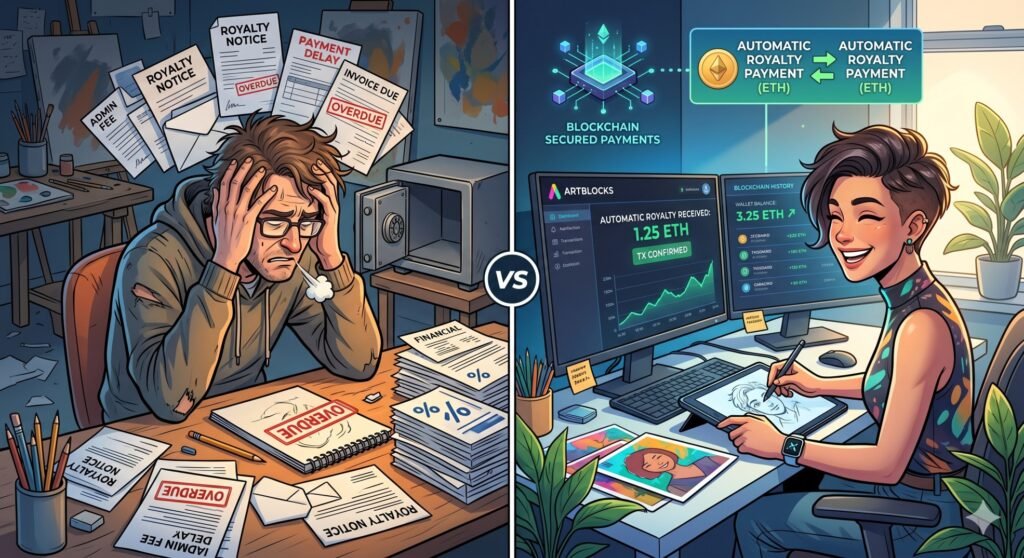
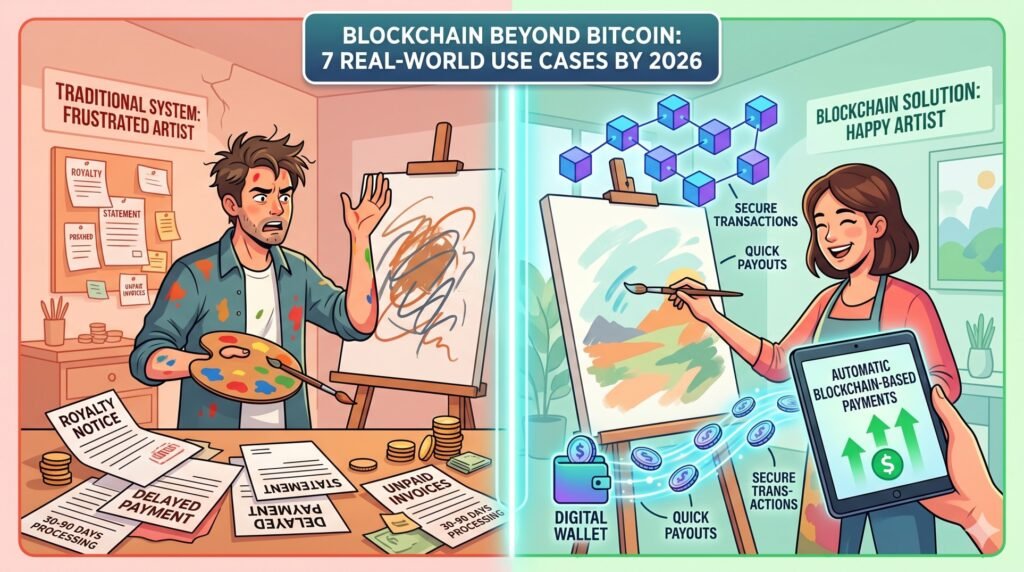
Blockchain introduces smart contracts and digital scarcity to solve this. An artist can mint a unique digital certificate (an NFT, but think beyond the hype) for their work. Every time that work is sold, resold, or licensed in the future, a smart contract automatically executes, sending the agreed-upon royalty percentage directly to the creator’s wallet.
No more chasing payments, no more relying on opaque collection societies. It’s direct, transparent, and automatic. Platforms are already emerging that let musicians sell fractional ownership of their songs to fans, who then earn micro-royalties. By 2026, this model could fundamentally restructure the creative economy, putting power and profit back into the hands of the creators.
4. Enabling Trustworthy Voting Systems
Blockchain Beyond Bitcoin: 7 Real-World Use Cases by 2026-The integrity of elections is a cornerstone of democracy. Here, blockchain’s core features—transparency, immutability, and decentralization—are uniquely valuable.
A blockchain-based voting system wouldn’t store how you voted (protecting privacy) but would record an encrypted, time-stamped ballot on a distributed ledger. This makes the process tamper-evident. Any attempt to alter votes would be immediately noticeable across the network.
Pilot projects have already been conducted in places like Utah County, Utah, for overseas military voters. While challenges around digital access and user verification remain, the potential is clear:
- Increased auditability and public confidence.
- Faster, more accurate results.
- Secure remote voting options.
Honestly, I think this use case has the biggest hurdles to clear, but by 2026, we’ll likely see more refined pilots. It’s not about replacing paper ballots overnight, but about building a resilient, digital-audit layer for our democracies.
5. Transforming Digital Identity Management
Blockchain Beyond Bitcoin: 7 Real-World Use Cases by 2026-We currently have a fragmented digital identity: dozens of passwords, usernames, and profiles owned by different companies. This creates security risks and makes you the product.
Self-sovereign identity (SSI) via blockchain flips the model. You create a single, verifiable digital ID that you control. You can then share only the necessary pieces of it—proving you’re over 21 without revealing your birthdate, or confirming you have a degree without sharing your full transcript.
Practical impacts:
- Streamlined KYC: One verification for banking, healthcare, etc.
- Reduced Identity Theft: No central database to hack.
- Empowering Refugees: Providing proof of identity for those without formal documents.
Organizations like the World Economic Forum are actively exploring SSI frameworks. It’s a move from platform-owned identities to a user-centric internet, and it’s a foundational piece of Web3.
6. Optimizing Energy Grids & Carbon Trading
Blockchain Beyond Bitcoin: 7 Real-World Use Cases by 2026-The green energy transition is complex. How do we efficiently buy and sell solar power between neighbors? How do we verify that a company’s carbon offset purchase is legitimate?
Blockchain for energy allows for peer-to-peer (P2P) energy trading. Your home’s solar panels can automatically sell excess power to a neighbor via a smart contract on a local microgrid. It’s decentralized, efficient, and cuts out the middleman.
Furthermore, it brings transparency to carbon credit markets. Each carbon credit can be tokenized and tracked on a blockchain, ensuring it isn’t double-counted or sold fraudulently. This builds real trust in corporate sustainability claims.
As we race toward 2030 climate goals, these tools are becoming critical infrastructure, not just experiments.
7. Securing Academic Credentials & Professional Certifications
Blockchain Beyond Bitcoin: 7 Real-World Use Cases by 2026-Fake degrees and certificates are a multi-billion dollar problem for employers and institutions worldwide. Verifying a credential often involves slow, manual processes.
Blockchain provides a simple, elegant solution. Universities and training institutions can issue digital diplomas or certificates directly to a blockchain. These are instantly verifiable by any employer with a click, without needing to contact the issuing school.
Schools like MIT have been issuing blockchain-based digital diplomas since 2017. By 2026, this could expand to professional certifications, licences, and even workplace training records. It creates a trusted, portable, and lifelong record of achievement for every individual.
Frequently Asked Questions (FAQ)
Q1: Isn’t blockchain too slow and energy-intensive for these uses?
Great question. Early blockchains like Bitcoin are. However, newer, “green” blockchains use Proof-of-Stake (PoS) or other consensus mechanisms that are vastly more energy-efficient and faster, making them suitable for enterprise applications.
Q2: What’s the main barrier to blockchain adoption by 2026?
Interoperability and regulation. For systems to talk to each other (e.g., a supply chain ledger talking to a payment ledger), common standards are needed. Governments are also still working out the legal frameworks for these decentralized systems.
Q3: Do I need to be a developer to understand or use this technology?
Not at all. Just like you don’t need to understand TCP/IP to send an email, users will interact with blockchain through simple apps and interfaces. The complexity will be hidden behind user-friendly experiences.
Q4: Is blockchain completely unhackable?
No system is. While the blockchain ledger itself is extremely secure, the applications and exchanges built on top of it can have vulnerabilities. It’s about drastically increasing security, not claiming perfection.
Q5: How can I prepare for this blockchain-enabled future?
Start by learning the core concepts. Pay attention to industries you work in or are passionate about—see how they’re experimenting. Digital literacy is the first and most important step.
Conclusion: The Future is Decentralized and Practical
The story of blockchain use cases in 2026 isn’t about get-rich-quick schemes. It’s about building more transparent, efficient, and trustworthy systems for the things that matter most: our food, our health, our identities, and our shared institutions.
The technology is moving from the volatile trading floor into the fabric of our daily lives. While it won’t solve every problem overnight, its potential to reduce fraud, increase agency, and foster trust is undeniable.
So, what do you think? Which of these use cases excites you the most, or do you see a potential application in your own field? Drop a comment below—I’d love to hear your perspective. And if you found this deep dive useful, consider sharing it with a colleague who’s curious about the real future of blockchain.