
Table of Contents
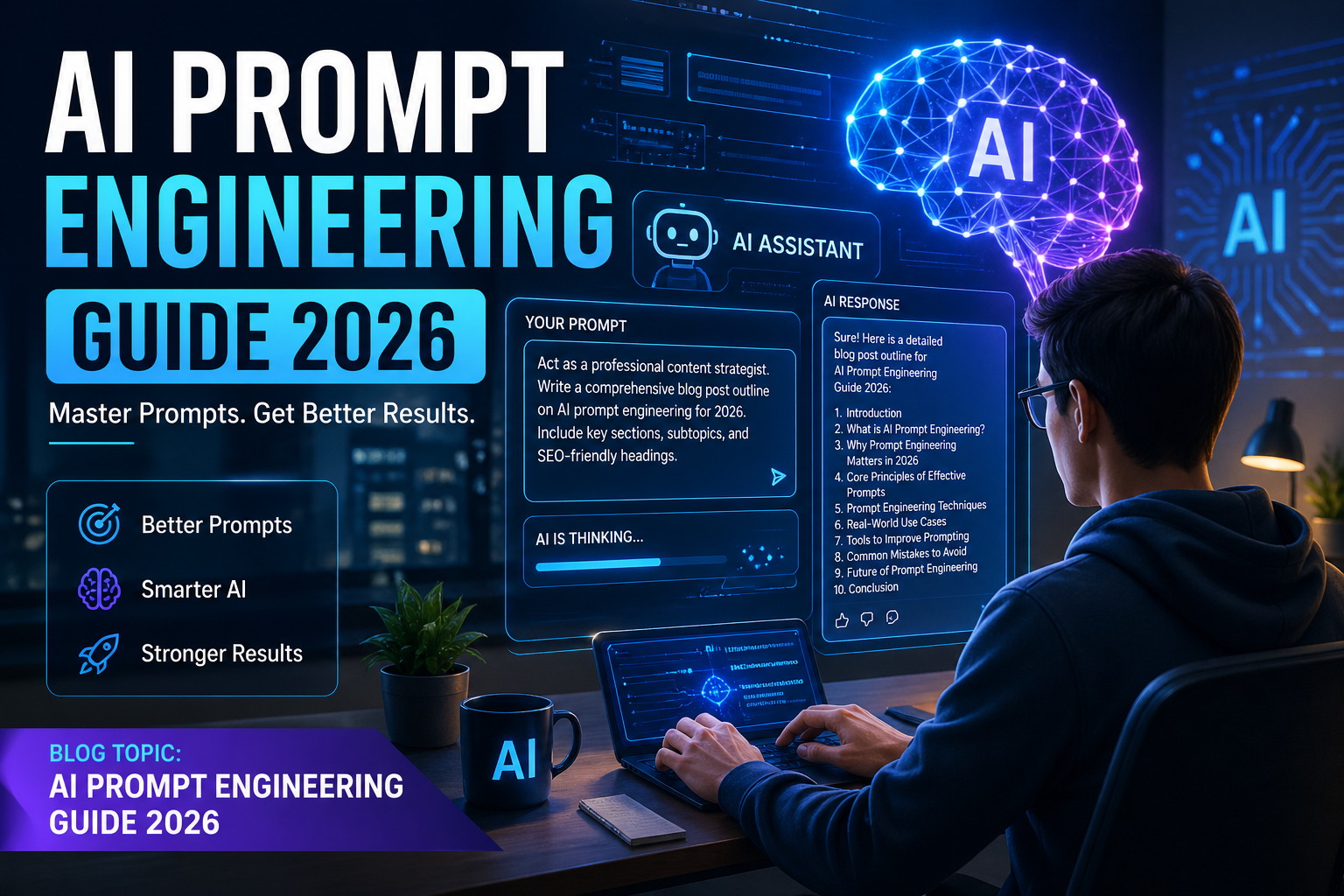
AI is no longer just a buzzword—it’s part of daily work. But here’s the truth: your results depend on how you ask. That’s where this AI prompt engineering guide 2026 comes in.
Whether you’re a blogger, developer, marketer, or student, learning how to write better prompts can instantly boost your productivity. And honestly, once you get it right, it feels like having a superpower.
✅ Quick Summary (Key Takeaways)
- Clear prompts = better AI results
- Structure and context matter more than fancy words
- Practice and iteration are the real game-changers
Introduction
If you’ve ever felt frustrated with AI giving vague or wrong answers, you’re not alone. I’ve personally tested dozens of prompts while writing blogs and guides, and the difference between a bad prompt and a great one is massive.
In this AI prompt engineering guide 2026, you’ll learn simple techniques, real examples, and practical strategies to get high-quality outputs every time.
What is AI Prompt Engineering?
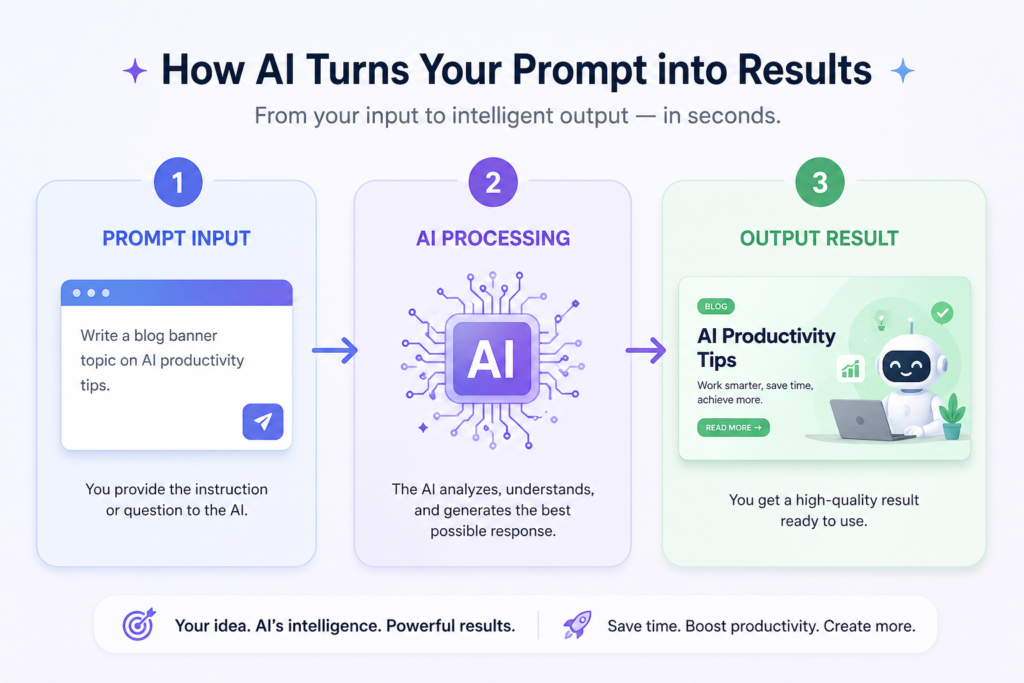
AI prompt engineering is the skill of crafting inputs (prompts) to get the best possible output from AI tools.
Think of it like giving instructions to a very smart assistant. If your instructions are unclear, results will suffer. However, when you’re precise and structured, the output improves dramatically.
Why It Matters in 2026
AI tools are evolving fast. According to industry reports, over 80% of digital workflows now involve AI assistance. Therefore, prompt skills are becoming just as important as typing or searching online.
How AI Understands Your Prompts
Before writing better prompts, it helps to know how AI “thinks.”
AI models don’t actually understand like humans. Instead, they:
- Predict the next word based on patterns
- Use context from your prompt
- Follow structure and instructions
Key Factors That Affect Output
- Clarity – Avoid vague instructions
- Context – Give background information
- Specificity – Define format, tone, and length
- Examples – Show what you want
Types of AI Prompts You Should Know
Not all prompts are created equal. In fact, using the right type can completely change your results.
1. Basic Prompts
Simple instructions like:
“Write a blog about fitness.”
👉 Result: Usually generic.
2. Detailed Prompts
Include context, tone, and structure.
Example:
“Write a 1000-word beginner-friendly fitness blog with tips and examples.”
👉 Result: Much better.
3. Role-Based Prompts
This is my personal favorite.
Example:
“You are a professional fitness trainer. Create a workout plan for beginners.”
👉 Result: More expert-level output.
4. Step-by-Step Prompts
These guide AI logically.
Example:
“Explain SEO step-by-step for beginners with examples.”
👉 Result: Clear and structured content.
Best Practices in AI Prompt Engineering Guide 2026
Let’s get practical. These strategies actually work.
✔️ 1. Be Specific
Bad prompt:
“Explain marketing.”
Good prompt:
“Explain digital marketing strategies for small businesses in 2026 with examples.”
✔️ 2. Use Clear Formatting
Break your instructions into steps:
- Define role
- Set goal
- Specify format
✔️ 3. Add Constraints
Tell AI what NOT to do.
Example:
“Write in simple English. Avoid technical jargon.”
✔️ 4. Use Iteration
Don’t expect perfection in one go.
In my experience writing about AI tools, I often refine prompts 2–3 times before getting the ideal result.
✔️ 5. Provide Examples
Example-based prompts improve accuracy significantly.
Advanced Prompt Engineering Techniques
Once you understand basics, move to advanced methods.
🔹 Chain-of-Thought Prompting
Ask AI to explain reasoning step-by-step.
Example:
“Solve this problem and explain your reasoning step-by-step.”
🔹 Few-Shot Prompting
Provide examples before asking.
Example:
“Example 1: …
Example 2: …
Now generate a similar output.”
🔹 Context Layering
Add multiple layers of context:
- Audience
- Goal
- Tone
- Output format
This technique alone can 2x your output quality.
Real-World Use Cases of Prompt Engineering
This AI prompt engineering guide 2026 isn’t just theory—it’s practical.
For Bloggers
- Generate SEO articles
- Create outlines
- Improve readability
For Students
- Summarize notes
- Explain concepts
- Generate study plans
For Businesses
- Write emails
- Automate support responses
- Create marketing copy

Common Mistakes to Avoid
Even experienced users make these mistakes.
❌ Being Too Vague
Leads to generic responses.
❌ Overloading the Prompt
Too much information confuses AI.
❌ Ignoring Structure
Unstructured prompts = messy outputs.
❌ Not Reviewing Output
Always edit and refine.
Honestly, I’ve made all of these mistakes. Fixing them improved my results overnight.
Tools That Help With Prompt Engineering
While skills matter most, tools can help.
Popular AI Tools
- Chat-based AI assistants
- Writing generators
- Code assistants
Helpful Add-ons
- Prompt templates
- AI writing frameworks
- SEO optimization tools
FAQ Section
1. What is prompt engineering in simple terms?
It’s the process of writing clear instructions to get better results from AI tools.
2. Is prompt engineering a valuable skill in 2026?
Yes. With AI growing rapidly, it’s becoming a must-have digital skill.
3. Can beginners learn prompt engineering?
Absolutely. Start with simple prompts and improve with practice.
4. How long does it take to master prompt engineering?
Basic skills can be learned in days. However, mastering it takes consistent practice.
5. Do I need coding knowledge for prompt engineering?
No. Most prompt engineering skills don’t require coding.
Conclusion
This AI prompt engineering guide 2026 shows one clear thing: the better your prompts, the better your results.
You don’t need complicated techniques to start. Just focus on clarity, structure, and iteration. Over time, your prompts will naturally improve.
Honestly, I think prompt engineering is one of the most underrated digital skills right now—and those who master it early will have a big advantage.
👉 Now it’s your turn:
Try writing your own prompts, experiment, and see what works best.
If you found this guide helpful, share it with others or drop a comment below—I’d love to hear how you’re using AI in your daily work!