
Table of Contents
Have you ever wondered where your data actually lives? In the early days of the internet, we treated “the cloud” like a magical, borderless place where files just floated. However, in my 10 years of tracking tech shifts, I’ve realized the physical location of your servers matters just as much as the code itself.
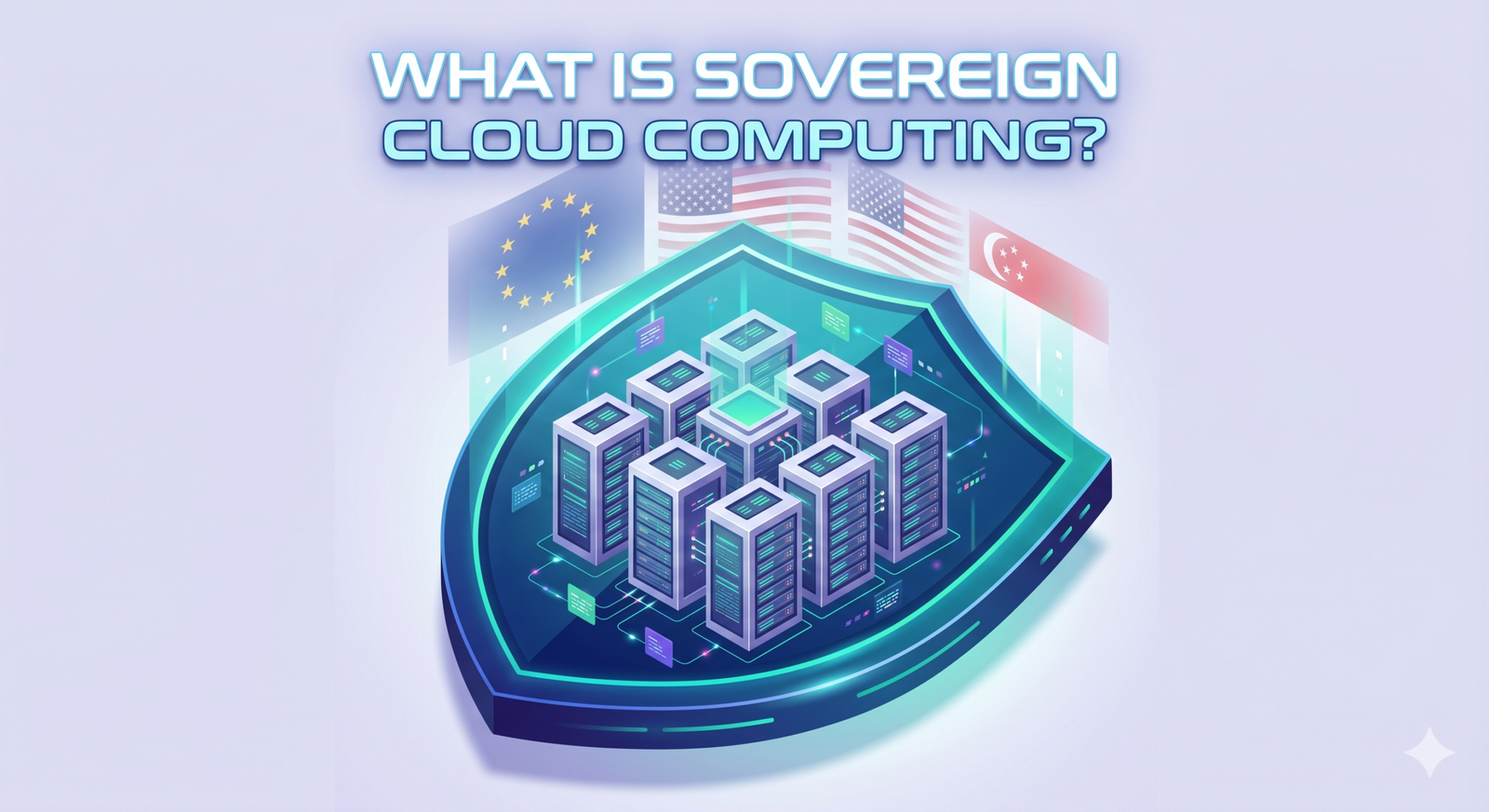
If you’re a business owner or a tech lead, you’ve likely heard the buzz. But what is sovereign cloud computing, and why is everyone from the EU to Singapore suddenly obsessed with it? Simply put, it’s about taking back control. When we ask what is sovereign cloud computing, we are really asking how a nation or business can protect its digital borders. It ensures your data is subject to the laws of the country where it’s collected, keeping it safe from foreign prying eyes.
Key Takeaways
- Local Control: Understanding what is sovereign cloud computing starts with knowing your data stays within specific borders.
- Security First: It prevents foreign governments from accessing sensitive information via extraterritorial laws.
- Digital Independence: It allows nations to operate without being tethered to a single foreign tech giant.
Why the “Old” Cloud Isn’t Enough Anymore
For a long time, we relied on the “Big Three” hyperscalers. They’re fast, they’re global, and they’re incredibly convenient. But there’s a catch. If you use a provider based in another country, that country’s government might be able to demand access to your data. To solve this, many are asking what is sovereign cloud computing and how can it prevent this legal overreach?
I remember talking to a CTO at a European healthcare firm last year. He was terrified. “If we store patient records on a US-based cloud,” he said, “are we technically violating our own privacy laws?” That is exactly the kind of headache solved when you implement what is sovereign cloud computing. Moreover, it bridges the gap between the efficiency of the cloud and the strict requirements of national security.
Understanding the Core Pillars of Sovereign Cloud
To truly answer what is sovereign cloud computing, we need to look at its three main pillars. Think of these as the “rules of the road” for digital independence.
1. Data Residency and Sovereignty
This is the big one. Data residency means the physical “bits” stay on servers located within your borders. But what is sovereign cloud computing without legal protection? Sovereignty takes it a step further. It means those bits are governed only by your local laws. Therefore, a foreign court can’t subpoena your data because they have no legal standing over the local provider.
2. Operational Sovereignty
Who actually runs the data center? When exploring what is sovereign cloud computing, we find that the operators are usually local citizens with the necessary security clearances. This prevents a foreign entity from “flipping a switch” or locking you out of your own infrastructure during a diplomatic spat.
3. Software Sovereignty
In my view, this is the most underrated part. It’s about being able to move your workloads without being stuck in “vendor lock-in.” If you rely on a proprietary tool that only one foreign company owns, you aren’t truly sovereign. A major part of what is sovereign cloud computing involves using open-source standards to maintain flexibility.
The Major Benefits: Why Should You Care?
You might be thinking, “This sounds like a lot of extra work. Is it worth it?” In many cases, it isn’t just worth it—it’s mandatory. When businesses first investigate what is sovereign cloud computing, they often find three major advantages:
- Compliance Made Easy: If you deal with GDPR in Europe, what is sovereign cloud computing offers you a direct path to compliance. It automates much of the “legal” heavy lifting.
- Enhanced Security: By limiting the “attack surface” to a local region, you reduce the risk of global mass-scale breaches.
- Boosting Local Economy: Using local providers keeps investment within your own country. It’s a win-win for the tech ecosystem.
Honestly, I think the biggest benefit is peace of mind. When you fully grasp what is sovereign cloud computing, you realize that a change in foreign policy won’t suddenly turn your business upside down.
Sovereign Cloud vs. Public Cloud: What’s the Difference?
It’s easy to get these confused. A public cloud is like a giant international hotel. It’s efficient, but the rules are set by the owner. To distinguish the two, you must define what is sovereign cloud computing: it is like owning a high-security apartment in your own hometown.
| Feature | Public Cloud | Sovereign Cloud |
| Data Location | Anywhere (Global) | Strictly Local |
| Legal Jurisdiction | Often Foreign | Always Local |
| Primary Goal | Scalability & Cost | Security & Compliance |
| Control | Provider-led | User/Nation-led |
As a result of these differences, we’re seeing a “hybrid” approach. Many companies keep their non-sensitive marketing stuff on the public cloud but move their core intellectual property to a model that fits the definition of what is sovereign cloud computing.
How to Get Started with Sovereign Solutions
If you’re looking to make the jump, don’t try to do it overnight. I’ve seen companies rush this and end up with a messy, fragmented system because they didn’t fully plan for what is sovereign cloud computing requirements.
- Audit Your Data: Determine what is “highly sensitive” versus “general info.”
- Pick a Local Partner: Look for providers that have specific certifications (like SecNumCloud in France).
- Check for Interoperability: Ensure the sovereign cloud can talk to your existing tools.
Common Myths About Sovereign Cloud
Let’s clear the air on a few things. I’ve heard some wild rumors in the tech industry lately regarding what is sovereign cloud computing.
“It’s way too expensive”
While it might cost a bit more than the rock-bottom prices of global giants, the cost of a data breach is much higher. In addition, local providers are becoming much more competitive as the demand for what is sovereign cloud computing grows.
“It’s slower than public cloud”
Actually, because the servers are physically closer to you, latency is often lower. When you implement what is sovereign cloud computing, you might find your apps running faster than ever.
The Future of Global Data
In my experience writing about cloud infrastructure, the trend is clear: the era of the “borderless internet” is evolving. We are moving toward a “splinternet” where different regions have different rules. While some see this as a hurdle, I see it as a necessary evolution for safety.
Experts at Gartner and IDC suggest that by 2026, over 50% of large enterprises will use sovereign cloud features. This is why understanding what is sovereign cloud computing is no longer optional for IT leaders. It’s not a fad; it’s the new standard for trust.
Check out the World Economic Forum’s report on digital sovereignty for a deeper dive.
Frequently Asked Questions (FAQ)
1. Is sovereign cloud only for governments?
No! While governments were the first to use it, private companies in finance and healthcare are now the biggest adopters. Anyone wondering what is sovereign cloud computing should know it is for any sensitive data.
2. Is sovereign cloud the same as a private cloud?
Not exactly. A sovereign cloud can be “public” (available to many local companies) but it must follow strict national laws.
3. Does Microsoft or Google offer sovereign cloud?
Yes, they have started partnering with local companies (like T-Systems or Orange) to offer solutions that meet the criteria of what is sovereign cloud computing.
4. Will it protect me from all hackers?
No cloud is 100% unhackable. However, what is sovereign cloud computing provides is a reduced risk of state-sponsored surveillance and localized security protocols.
5. Is it hard to migrate?
It can be complex. However, most modern providers use “containers,” which makes moving your data and apps much easier once you understand what is sovereign cloud computing.
Conclusion
So, what is sovereign cloud computing? It’s your ticket to digital independence. It’s the realization that in a world driven by data, who controls that data holds the power. By keeping your data local and under your own laws, you’re not just following regulations—you’re protecting your future.
If you haven’t looked into your data residency yet, now is the time to ask: what is sovereign cloud computing going to do for my organization? Don’t wait for a legal crisis to start the conversation.
What are your thoughts on data sovereignty? Let me know in the comments below—I’d love to hear your take!